

Estimated reading time: 10 minutes
Every morning somewhere outside Lucknow, Priya walks to her local Mother Dairy booth.
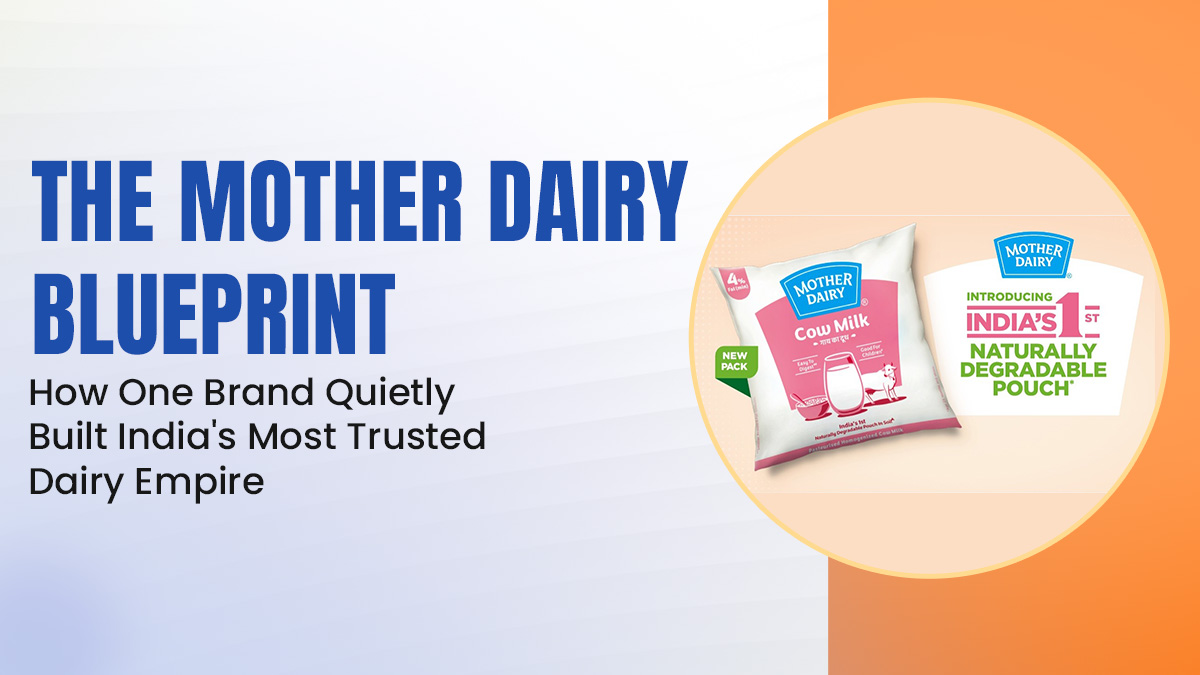
She’s not thinking about brand loyalty or market share. She just knows that when she tears open that familiar blue and white packet the milk inside will taste exactly like it did yesterday. And the day before. And every single day for the past fifteen years.
That’s not an accident. That’s the result of decades of unglamorous work that most brands never bother doing.
What Was Actually Wrong With the Indian Dairy Market Before Mother Dairy Fixed It?
Back in the early 2000s buying milk in India felt like playing Russian roulette with your family’s health.
Watery stuff from the local vendor. Thick creamy milk that sometimes tasted off. Quality was a lottery. Freshness was for rich people. Trust was something you earned after months of trial and error with different suppliers.
The dairy market was basically the Wild West except messier and with way more disappointed families.
- No reliable cold chain meant milk spoiled before it reached the city
- Local vendors had zero accountability and zero consistency
- A middle-class Indian family had no way of knowing what they were actually drinking
Then Mother Dairy showed up and decided to fix all of it. Not with marketing. With operations.
The Mother Dairy Brand Framework
| Pillar | What It Involved | Why It Worked |
| 1. Trust as the Product | Three beliefs held without compromise: trust isn’t a marketing gimmick it’s what you’re selling, quality doesn’t have to cost a fortune, the real job is making people’s lives better | Built the most reliable cold chain network in India before worrying about brand campaigns |
| 2. Solve the Actual Problem | Spent months with dairy farmers learning spoilage rates, transportation nightmares, and what it takes to keep milk fresh in 45-degree heat | Cooling centres, backup power systems, temperature monitoring at every step from cow to customer |
| 3. Make It Emotional Not Functional | Campaigns showing Amma making chai, kids growing stronger, festival celebrations built around dairy | The milk packet stopped being a grocery item and became the thing that made breakfast possible |
| 4. Expand by Solving More Problems for the Same People | Fresh curd, soft paneer, authentic ghee: every new product carried the same quality guarantee | Never chased trends. Just solved more problems for customers who already trusted them |
How Did a Government Initiative Become Something People Actually Loved?
Most people don’t know that Mother Dairy started as a government project under the National Dairy Development Board.
Government projects usually mean red tape, delays, and products nobody actually wants. Mother Dairy decided to do something different entirely.
Instead of focusing on quarterly reports they decided to build something that had never existed in India before: a dairy supply chain you could actually depend on.
Three ideas shaped everything that followed.
Trust isn’t a marketing gimmick. It’s literally what you’re selling. Great quality doesn’t have to cost a fortune. And the real job isn’t making money. It’s making people’s lives genuinely better.
- Sounds simple until you try executing it across a billion people with terrible roads and no reliable cold storage
- Most companies looked at those challenges and decided the market was too complicated
- Mother Dairy looked at the same problems and saw exactly where to build their moat
For founders: stop trying to work around industry problems. Figure out how to solve them better than anyone else and you’ll own the market.
What Did Mother Dairy Do That No Other Dairy Brand Bothered to Do?
Instead of hiring consultants and running focus groups they went directly to the source.
They spent months living with dairy farmers. Learning about spoilage rates that could wipe out an entire day’s income. Understanding why getting milk from remote villages to city markets was such a logistical nightmare. Figuring out exactly what it takes to keep milk fresh in 45-degree heat when your transport involves bullock carts and unreliable trucks.
What came out of that time in the field wasn’t a marketing strategy. It was an operational system that competitors couldn’t replicate quickly.
- Strategically placed cooling centres at every critical point in the supply chain
- Backup power systems so a single outage couldn’t ruin an entire batch
- Route optimisation that accounted for monsoons, festivals, and political strikes
- Temperature monitoring at every single step from cow to customer
This wasn’t just operational efficiency. This was their secret weapon. And by the time competitors understood what they’d built it was already too late to catch up.
For founders: the boring operational work that nobody wants to do is almost always where the real competitive moat gets built. Mother Dairy built theirs in the cold chain while everyone else was designing logos.
How Did Mother Dairy Turn a Commodity Into Something People Felt Something About?
While competitors were printing nutritional facts and protein percentages on packets, Mother Dairy went somewhere completely different.
They made milk about feelings.
Their campaigns didn’t show lab results or quality certifications. They showed Amma making chai for the family. Kids getting stronger. Festival celebrations where the perfect rasgullas brought everyone together. The kheer Nani was making for Diwali.
Slowly and quietly the familiar blue and white packet stopped being just another grocery item.
- It became the thing that made breakfast possible
- The secret ingredient in weekend pancakes
- The one product a mother could trust completely with her children’s health
When you create that kind of emotional connection price comparisons become almost irrelevant. You’re not selling a commodity anymore. You’re selling peace of mind.
For founders: people don’t remember specifications. They remember how your product made them feel about themselves and their choices. Mother Dairy understood this before most Indian brands had even thought about it.
How Did Mother Dairy Build a Community That Marketed the Brand Without Being Asked?
Most brands try to get people to buy their products. Mother Dairy created something much more powerful.
They showed up at health camps in rural areas. Sponsored school nutrition programmes. Created helplines where worried mothers could call and get expert dietary advice. Organised farmer training sessions that improved milk quality across entire regions.
Their slogan “Khushboo Wali Dudh” wasn’t clever marketing. It tapped into something deeper: the memory of what real fresh milk actually smells like. Something most urban Indians hadn’t experienced in years.
- Families became Mother Dairy advocates without even realising it
- They recommended it to neighbours without being asked
- They chose it automatically at the store without comparing alternatives
That’s not customer loyalty. That’s something much more valuable and much harder for a competitor to buy their way into.
For founders: stop trying to acquire customers. Start building a community of people who genuinely believe in your mission. The difference between the two shows up most clearly when a competitor arrives with lower prices.
Mother Dairy vs. The Typical Indian Dairy Brand Playbook
| Dimension | Mother Dairy’s Approach | Typical Dairy Brand | Long-Term Outcome |
| Trust building | Built it through operational excellence and genuine consistency over decades | Built it through advertising claims and packaging promises | Trust that survived scrutiny vs. trust that collapsed under it |
| Product development | Solved real problems for existing customers: curd, paneer, ghee, sweets | Chased trends and new market segments | Deeper loyalty vs. confused identity |
| Marketing | Made milk emotional: family moments, festivals, childhood memories | Nutritional facts, protein percentages, quality certifications | Feeling vs. information |
| Community | Health camps, school programmes, farmer training, expert helplines | Loyalty points and promotional discounts | Evangelists vs. repeat purchasers |
| Expansion | Only when it solved genuine problems for people who already trusted them | When revenue targets demanded new revenue streams | Consistent quality vs. diluted brand |
FAQ
Ques1: How did Mother Dairy build trust in a market where trust basically didn’t exist?
Ans1: By doing the unglamorous work nobody else was willing to do. They built a cold chain network that guaranteed the same quality every single day regardless of weather, infrastructure, or geography. Trust in dairy isn’t built through campaigns. It’s built through the milk tasting exactly the same on a Tuesday in July as it did on a Monday in January. Mother Dairy figured that out and built their entire operation around it.
Ques2: Why did making milk emotional work when the product itself is essentially a commodity?
Ans2: Because people don’t buy commodities. They buy certainty and familiarity. When Mother Dairy’s campaigns showed Amma making chai and Nani preparing Diwali kheer they weren’t selling milk. They were selling the confidence that the most important moments in family life would go exactly as planned. That’s worth far more than any specification on a packet.
Ques3: How did Mother Dairy expand without losing the quality that made them trusted in the first place?
Ans3: They didn’t expand to chase revenue. They expanded because the same families who trusted their milk started asking for more. Fresh curd that tasted homemade. Paneer that was actually soft. Ghee that smelled like what your grandmother used to make. Every new product was an answer to a real question from a real customer not a decision made in a boardroom because the quarterly numbers needed a boost. The quality held because the reason for expanding was right from the start. They never chased trends or new demographics. They just kept asking what else the same customer needed and whether they could deliver it with the same guarantee.
Ques4: What made Mother Dairy’s community building different from a standard loyalty programme?
Ans4: They showed up in people’s lives in ways that had nothing to do with selling milk. Health camps. School nutrition programmes. Expert helplines for worried mothers. Farmer training sessions. When a brand does things like that people don’t just stay loyal. They become advocates. They recommend you to neighbours without being asked because they feel the brand genuinely cares about the same things they do.
Ques5: What is the single most important lesson from Mother Dairy for founders building in India today?
Ans5: Solve the operational problem nobody else wants to solve and build your brand on top of that foundation. Mother Dairy’s marketing works because the product genuinely delivers on every promise every single day. If the cold chain had failed, if the quality had been inconsistent, no amount of emotional advertising about Amma’s chai would have saved them. Get the foundation right first. Everything else is easier when the product actually earns the trust you’re asking for.
Summary
Every morning across India millions of families tear open a blue and white packet without a second thought.
That automatic trust, built over decades without drama or fanfare, is one of the most valuable things any brand can possess. And Mother Dairy built it the hard way.
Not through campaigns or celebrity endorsements or viral moments. Through cooling centres in remote areas. Through temperature monitoring at every step of a supply chain that most companies would have given up on. Through showing up at health camps and school nutrition programmes and farmer training sessions in places that had nothing immediately to do with selling more milk.
They made milk emotional when everyone else was making it functional. They built community when everyone else was chasing customers. They expanded carefully when everyone else was chasing growth.
And through all of it the milk in that blue and white packet tasted exactly the same.
That consistency, delivered reliably across a billion people and decades of change, is not a small thing. It’s the whole thing.
Mother Dairy isn’t just a dairy company.
It’s proof that caring about the unglamorous work, the cold chain, the farmer training, the operational detail that nobody sees, is exactly how you build something that lasts long enough to become part of how a nation starts its day.
Note: Pattern analysis based on Mother Dairy’s publicly available brand history, operational communications, and Indian dairy industry reporting.
