

Estimated reading time: 11 minutes
For millions of Indians the sharp whistle of a pressure cooker isn’t just a sound.
It’s a dinner bell. A sign that someone who loves you is in the kitchen. The soundtrack of a Sunday afternoon when dal is on the stove and the whole house smells like home.
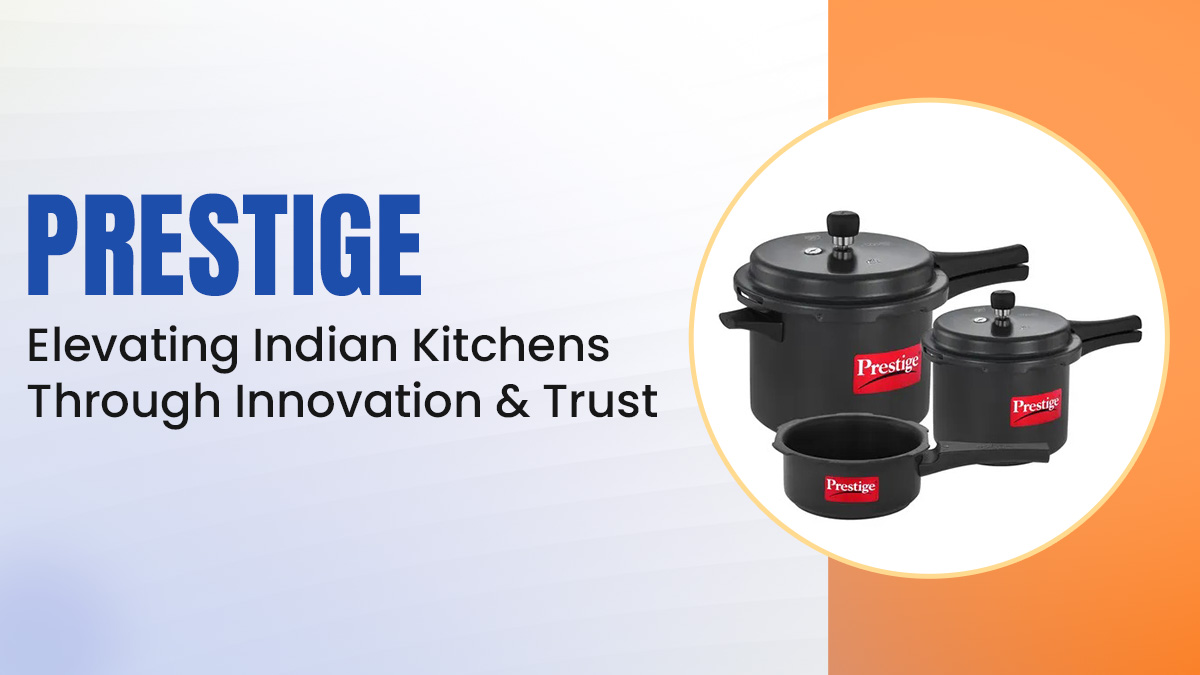
For decades that sound has been almost synonymous with one name: Prestige.
But this brand did more than sell a metal pot. It took the most feared appliance in the Indian kitchen and turned it into the most trusted.
What Was Actually Broken About the Indian Kitchen Market Before Prestige Fixed It?
By the mid-20th century the Indian kitchen was a place of high effort and genuine risk.
Early pressure cookers had a reputation. Ticking time bombs. Things that exploded when you least expected it. The market was flooded with low-quality products and trust was essentially nonexistent. Women who spent hours in the kitchen every day were being asked to trust appliances that genuinely scared them.
For a new brand to enter this space it wasn’t enough to be better. It had to change the entire emotional relationship people had with the category.
- The fear was real and widely shared across Indian households
- No brand had stepped up to make safety its core promise rather than a footnote
- The person spending the most time with the product had the least say in what got bought
Prestige looked at all of that and decided to start with the fear.
The Prestige Brand Framework
| Pillar | What It Involved | Why It Worked |
| 1. Solve the Biggest Fear First | Made safety non-negotiable before talking about any other feature. Obsessed over gaskets, safety valves, and build quality until the name Prestige itself became an assurance | In a market where trust was at zero the brand that earned it first owned the category |
| 2. Design for the Real User | Built for Indian homemakers, Indian recipes, Indian kitchens not a generic global consumer | Every product decision traced back to how people actually cooked in Indian homes not how a product manager imagined they did |
| 3. Connect to Emotion Not Specification | “Jo Biwi Se Kare Pyaar, Woh Prestige Se Kaise Kare Inkaar?” turned a kitchen appliance into a gesture of love | When you make a product emotionally meaningful price comparisons become almost irrelevant |
| 4. Own the Entire Problem Space | Evolved from pressure cooker company to Total Kitchen Solutions provider as customer aspirations grew | Customers who trusted Prestige for one thing were ready to trust it for everything their kitchen needed |
How Did Prestige Turn a Product That People Feared Into One They Trusted With Their Lives?
The turning point wasn’t a flashy new design or an advertising campaign.
It was a promise. A simple, powerful, and at the time completely unusual promise: safety first.
TTK Prestige didn’t launch a product. They launched a new era of trust in a category that had given people genuine reason to be afraid.
Three beliefs shaped everything from that point forward. Solve the biggest fear and make safety a non-negotiable feature not a luxury. Design for the Indian homemaker and the Indian way of life not some generic global standard. Build a relationship not just a sale by focusing on durability, reliability, and service that lasted beyond the purchase.
- They started by mastering one thing: the pressure cooker
- They obsessed over every component that stood between safety and danger
- The name Prestige became an assurance before it became a brand
For founders: in a market where trust is broken the brand that earns it first owns the category. Prestige didn’t win on features. They won on the one thing everyone else was ignoring.
How Did One Tagline Change the Way Indian Families Thought About Buying Kitchen Appliances?
- Murali, the marketing mind behind the brand, understood something most product-focused companies completely miss.
The decision-maker was the homemaker. But the purchase was often influenced by the husband. And that insight led to one of the most memorable taglines in Indian advertising history.
“Jo Biwi Se Kare Pyaar, Woh Prestige Se Kaise Kare Inkaar?”
He who loves his wife, how can he say no to Prestige?
Suddenly this wasn’t a kitchen appliance. It was a gesture of love. A symbol of a husband’s care for his wife’s safety and wellbeing. A way for a man to say something meaningful without words.
- The product didn’t change. The story around it did
- Buying a Prestige cooker became an act of love not a household purchase
- Price comparisons became emotionally irrelevant because nobody puts a price on caring about someone
While other brands were talking about steel quality and heat distribution, Prestige was talking about relationships. Their ads showed smiling families, festival preparations, and moments of shared joy not chefs in sterile kitchens.
For founders: people don’t buy what you make. They buy why you make it. Connect your product to a core human emotion and the conversation stops being about features entirely.
How Did Prestige Build a Community Around Something as Personal as Cooking?
Prestige understood something powerful: the kitchen is the heart of the home.
They couldn’t host rallies or fan events like a motorcycle brand. But they could build community around the shared experience of cooking and the joy of feeding people you love.
In-store cooking demonstrations. Recipe contests. Partnerships with cooking shows. Recipe books that taught homemakers how to get more from their products. In the digital age this evolved into social media communities where real users share real recipes and real kitchen triumphs.
- They didn’t just sell a product. They empowered customers to become better cooks
- Every piece of content and community initiative made the customer more capable not more dependent
- People who feel empowered by a brand don’t switch when a cheaper alternative appears
Something happened that no advertising budget can manufacture. Prestige users became advocates. They recommended the brand to daughters setting up their first kitchens. They gifted Prestige products at weddings. They posted about recipes on social media without being asked because the brand had genuinely become part of their cooking identity.
For founders: build a community by helping your customers become better at what they love doing with your product. That community becomes a moat no competitor can replicate.
How Did Prestige Grow From a Single Product Into the Brand That Owned the Entire Indian Kitchen?
One day Prestige realised something important.
People weren’t just buying a single pressure cooker anymore. As Indian aspirations grew families wanted a complete modern kitchen. And if they already trusted Prestige with the most important appliance in the house why would they go anywhere else for the rest?
That realisation became Total Kitchen Solutions.
Non-stick cookware. Mixer grinders powerful enough for Indian spices. Induction cooktops that offered a safer alternative to gas. Air fryers. Electric kettles. Their stores and online presence started reflecting this shift. You didn’t go to Prestige for a thing. You went to Prestige for everything your kitchen needed.
And every expansion stayed true to the same original promise: safe, reliable, designed for the way Indians actually cook.
- The Clip-On Cooker solved a common everyday frustration with lid placement
- The Svachh Cooker with its deep lid solved the uniquely Indian problem of dal and rice overflowing
- Hard Anodised Cookware brought professional-grade materials to home kitchens at accessible prices
For founders: don’t just sell a product. Own the entire problem space your customers live in. Prestige earned the right to expand because every new product carried the same trust as the first one.
Prestige vs. The Typical Indian Kitchenware Brand Playbook
| Dimension | Prestige’s Approach | Typical Kitchenware Brand | Long-Term Outcome |
| Core promise | Safety first. Then features. Then price | Features first. Price second. Safety as a footnote | Trust that compounded for decades vs. trust that never formed |
| Marketing | Emotional storytelling around love, family, and care | Product specifications and price comparisons | Cultural institution vs. commodity |
| Product development | Innovations that solved real Indian kitchen problems | Global product lines adapted minimally for India | Products that felt made for you vs. products that felt imported |
| Community | Empowered customers to become better cooks through demos, recipes, and education | Promotional campaigns and discount offers | Advocates who stayed for life vs. customers who stayed until a cheaper option arrived |
| Expansion | Only into categories where the same trust could be delivered | Revenue-driven expansion into whatever was growing | Deeper loyalty vs. confused identity |
FAQ
Ques1: How did Prestige build trust in a category where the product itself was feared?
Ans1: By making safety the entire point rather than one feature among many. They obsessed over every component that stood between safe cooking and disaster until the name Prestige itself became the assurance. In a market where trust was essentially zero the brand that earned it first owned the category. And once you own trust in a category it compounds over decades in a way that no advertising budget can manufacture after the fact.
Ques2: What made “Jo Biwi Se Kare Pyaar” such a powerful piece of marketing?
Ans2: It changed what the purchase meant. Before that tagline buying a pressure cooker was a household decision made on price and practicality. After it buying a Prestige was an act of love. A husband showing his wife that her safety in the kitchen mattered to him. When you make a product emotionally meaningful the conversation stops being about price entirely because nobody puts a rupee figure on caring about someone.
Ques3: How did Prestige expand into Total Kitchen Solutions without diluting the brand?
Ans3: By only expanding into categories where they could deliver the same promise they’d built their reputation on. Every new product, whether a mixer grinder or an induction cooktop, had to be safe, reliable, and designed for the way Indians actually cooked. The trust transferred because the standard never changed. Customers who trusted Prestige with the most important appliance in their kitchen were ready to trust it with everything else.
Ques4: How did Prestige build such a loyal community without social media in its early years?
Ans4: Through in-store cooking demonstrations, recipe books, recipe contests, and partnerships with cooking shows. They empowered customers to become better cooks not just better equipped ones. That distinction matters enormously. A brand that makes you more capable creates a different kind of loyalty than a brand that just sells you something useful. Prestige users became advocates because the brand genuinely improved their daily lives in the kitchen.
Ques5: What is the single most important lesson from Prestige for founders building in India today?
Ans5: Connect your product to a core human emotion before you worry about any other feature. Prestige didn’t win because their pressure cookers were technically superior. They won because they understood that the person using the product every day was afraid and they made that fear go away. Find the deepest fear or frustration your customer is living with. Solve that completely. Everything else, the features, the expansion, the community, builds naturally on top of that foundation.
Summary
A sharp whistle from the kitchen.
In millions of Indian homes that sound means dinner is almost ready. It means someone who loves you spent the last hour making something from scratch. It means home.
Prestige didn’t just make a pressure cooker. They changed the emotional relationship an entire nation had with the most feared appliance in their kitchen. They took genuine terror and replaced it with genuine trust. And then they spent decades proving that trust was worth keeping.
The tagline that made a kitchen appliance a gesture of love. The recipe books that made customers better cooks. The Svachh Cooker that solved the dal overflow problem every Indian homemaker had silently tolerated for years. The induction cooktop with pre-set Indian cooking menus. Every decision traced back to the same question: does this make the Indian kitchen safer, easier, and more joyful?
When you spend decades asking that question honestly and answering it with real products that actually deliver the community builds itself. The daughters who grew up watching their mothers cook with Prestige register for it at their own weddings. The husbands who bought it as an act of love pass that gesture to the next generation. The brand becomes part of the family story not just the kitchen inventory.
That’s not something you can manufacture with a campaign.
It’s something you earn one whistle at a time.
Note: Pattern analysis based on TTK Prestige’s publicly available brand history, product communications, and Indian kitchenware industry reporting.
