

Estimated reading time: 12 minutes
Think about this for a second.
A company built on Swiss chocolate and instant coffee lands in India. A country where every street corner has a chai wala and every festival has a different kind of sweet. A culinary world perfected over centuries by people who take their food seriously and personally.
At that moment Nestlé was just a foreign brand. A good one. But foreign.
What happened next is one of the most interesting localisation stories in business history. Not because Nestlé had the best technology or the biggest marketing budget. Because they did something most global brands never manage: they stopped trying to change what Indians wanted and started genuinely listening to what they already loved.
Nestlé India’s Four-Pillar Localisation Framework
| Pillar | What It Involved | Evidence |
| 1. Local Flavours Over Global Formulas | Three beliefs held without budging: local flavours matter more than global recipes, trust is built through respect, you become part of the family or you don’t get in at all | Reformulated products completely instead of pushing harder with what wasn’t working |
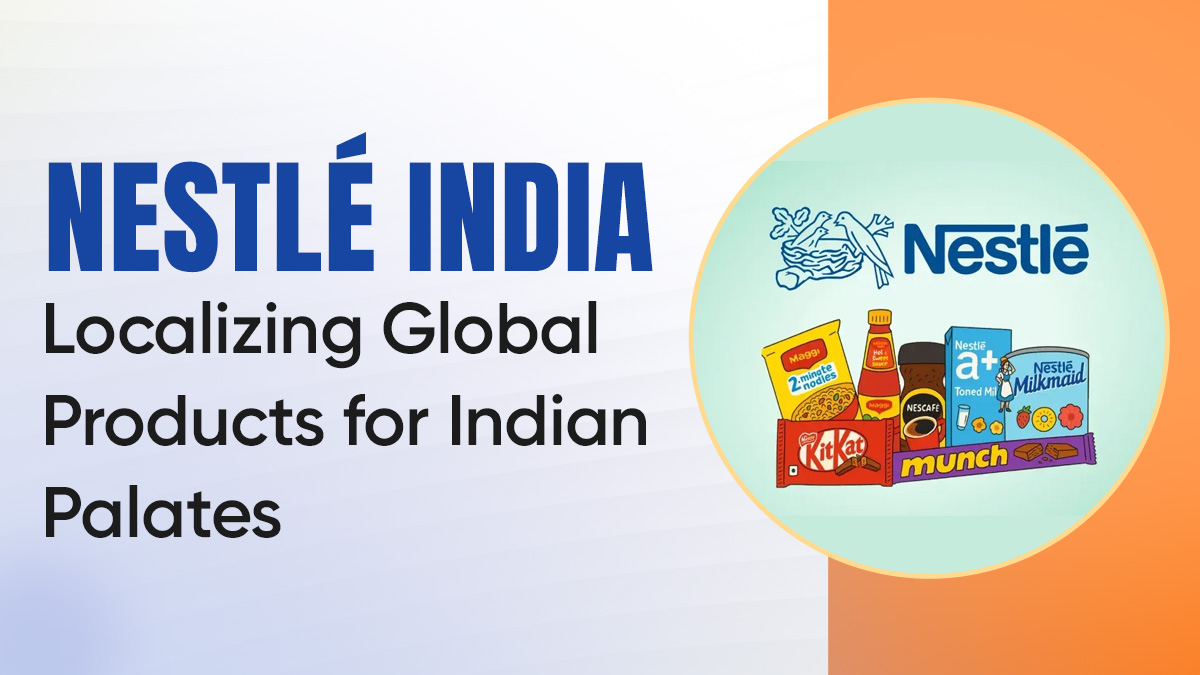
| 2. Built From Real Kitchens Not Boardrooms | Leaders went into homes across India. Tasted. Watched. Learned. Built from what they found | Maggi Masala-ae-Magic: a spice blend co-created with local insight that tasted like something made at home |
| 3. Turning Consumers Into a Community | #MyMaggiCreation and campaigns that invited people to share their own recipes and creations | Millions of Indians who see Maggi as part of their own story not just a product they buy |
| 4. Cultural Moments as Product Opportunities | Noticed people using products to celebrate festivals and gatherings and built into those moments | KitKat Mithai Edition: Swiss chocolate meeting Indian mithai. A fusion that felt natural because it was rooted in how people actually celebrated |
What Did Nestlé Have to Admit Before They Could Actually Win in India?
By the 1970s Nestlé had a problem.
Their products were genuinely good. By global standards, excellent. But global standards weren’t the point. The point was that Indian families had spent centuries developing a food culture that was deeply personal, intensely regional, and not particularly interested in being told what to taste.
The condensed milk was too sweet for the nation’s chai. The infant cereal flavours were worlds away from the dal and khichdi that Indian mothers had been feeding their babies for generations. And no amount of advertising was going to close that gap.
Most global brands in that position push harder. Spend more. Assume the market needs time to come around.
Nestlé did something harder. They admitted they didn’t know enough and went to find out.
Three beliefs shaped everything that followed. Local flavours matter more than global formulas. Trust is built through transparency and respect. And you can’t just sell a product to a family. You have to become part of it.
- They stopped trying to make India want what Nestlé already made
- They started asking what Nestlé needed to become for India
- That’s a harder question and a more honest one
For founders: the first step to winning a new market is admitting you don’t fully understand it yet. That admission is not weakness. It’s the only thing that makes genuine understanding possible.
How Did Going Into Indian Kitchens Change What Nestlé Actually Built?
Nestlé leaders didn’t stay in offices and commission research reports.
They went into kitchens. Real ones. Across different regions, different income levels, different family structures. They tasted local masalas. Watched how mothers cooked. Understood what a child’s after-school snack actually meant to a family and why it had to taste a certain way to be accepted.
They experienced every nuance and every preference that no survey could have captured.
And that experience changed everything about what got built.
Maggi Masala-ae-Magic didn’t come from a flavour scientist in Switzerland. It came from understanding what home-cooked food tasted like to an Indian child and working backwards from that feeling.
- Nestlé a+ Immunity Milk brought in turmeric and ginger because those weren’t trends. They were things Indian mothers had been using for generations
- Cerelac developed ragi and dal flavours because that’s what Indian babies were being weaned onto at home
- KitKat Mithai Edition fused Swiss chocolate with Indian festival sweets because Nestlé had noticed how people actually celebrated
The products were still Nestlé quality. But they finally tasted like home.
For founders: you cannot build something genuinely right for a market from a comfortable distance. The insight is always in the kitchen, the field, the shop floor. Go there. Stay long enough to actually understand what you find.
How Did Maggi Become Part of Indian Childhood Rather Than Just a Product Indians Bought?
While other food companies talked about calories and certifications, Nestlé focused on something different.
Feeling.
Their campaigns never led with nutritional charts or quality claims. They showed school lunches. Evening snacks. A mother in the kitchen. A child coming home hungry. The product wasn’t the point. The moment the product made possible was the point.
That shift from product to memory is where ordinary food brands end and household names begin.
- #MyMaggiCreation invited consumers to share their own recipes and turned a simple noodle pack into a canvas for culinary creativity
- Social media filled with real inventive Maggi dishes that no marketing team planned or produced
- People started telling their own Maggi stories because the brand had become part of their own story
And then came the crisis. The 2015 Maggi food safety controversy that pulled the product from shelves and tested everything Nestlé had built. Most brands don’t survive something like that.
Maggi came back. Because the relationship was real and decades deep. People missed it not as a product but as something that had genuinely been part of their lives.
For founders: brand loyalty that survives a crisis isn’t built in a campaign. It’s built in the years before the crisis when the brand consistently showed up as something real and worth trusting.
How Did Nestlé Use Technology to Understand Indian Culture Rather Than Just Sell Into It?
Someone at Nestlé noticed something interesting.
People weren’t just buying their products for everyday meals. They were using them for festivals. Family gatherings. Occasions that had specific cultural meanings and specific food expectations attached to them.
What if the product itself could honour those moments instead of just appearing in them?
That’s how the thinking behind culturally aware product development evolved. Not just making food Indians would buy but making food that understood why they were buying it.
- Predictive modelling helped forecast demand around festivals and even cricket matches
- Social listening during Navratri revealed the need for onion-garlic-free product options that aligned with fasting traditions
- In-store analytics tracked how shoppers actually responded to packaging and placement in real time
They figured out how to use data to make the brand feel more human not less. In a market as diverse and culturally specific as India that’s not a small thing. Most global brands use technology to optimise sales. Nestlé used it to deepen understanding.
For founders: the best use of data isn’t to sell more efficiently. It’s to understand more deeply. When technology helps you see what people actually care about and why you can build something that genuinely belongs in their lives.
Nestlé India vs. The Typical Global Brand Entry Playbook
| Dimension | Nestlé’s Approach | Typical Global Brand | Long-Term Outcome |
| Market entry | Admitted the global formula wasn’t working and rebuilt from real understanding | Pushed harder with existing products and assumed the market would come around | Household name vs. foreign brand that never quite landed |
| Product development | Built from Indian kitchens, regional tastes, and cultural insight | Adapted global products minimally and called it localisation | Tasted like home vs. tasted like a compromise |
| Marketing | Showed the emotional moments the product belonged in | Led with quality claims and global brand credentials | Part of the memory vs. part of the noise |
| Community | Invited consumers into the brand story through recipes and cultural moments | Broadcast messaging at consumers | Co-creators vs. audience |
| Crisis response | Survived Maggi controversy because the trust was real and decades deep | Brand trust built on campaigns collapses under scrutiny | Relationship that endures vs. reputation that shatters |
Key Takeaways
- Nestlé’s initial products didn’t work in India not because they were bad but because they weren’t made for this market. The condensed milk was too sweet for chai. The infant cereals tasted nothing like dal and khichdi. They had to admit that first before they could fix anything
- The turning point wasn’t a new campaign. It was Nestlé leaders going into actual Indian kitchens, tasting local masalas, watching how families cooked, and letting that experience reshape everything
- Maggi didn’t become a childhood memory through advertising. It became one because it genuinely tasted like something made at home. That’s a product decision not a marketing decision
- When Maggi faced a food safety crisis that would have ended most brands, Nestlé’s decades of built trust gave them something to come back to. They survived because the relationship was real
- KitKat Mithai Edition. Nestlé a+ Immunity Milk with turmeric and ginger. Cerelac with ragi and dal. None of these came from a global product team. They came from paying attention to India
- The lesson that travels everywhere: you can’t become part of someone’s family by selling to them. You have to understand them first
FAQ
Ques1: How did Nestlé go from struggling in India to becoming a household name?
Ans1: By stopping trying to make India want what Nestlé already made and starting to understand what India actually wanted. That sounds simple. It required admitting the global formula wasn’t working, going into real Indian kitchens, and rebuilding products from genuine cultural insight. The shift wasn’t a marketing decision. It was a product decision rooted in honest understanding.
Ques2: What made Maggi such a deeply personal product for Indian consumers?
Ans2: It tasted like something made at home. That’s not an accident. It came from Nestlé leaders genuinely learning what home-cooked food meant to Indian families and working backwards from that feeling to create a product that belonged in those moments. You can’t manufacture that kind of connection with advertising. It has to be true at the product level first.
Ques3: How did Nestlé survive the 2015 Maggi food safety crisis when it could have ended the brand?
Ans3: Because the relationship was real and decades old. Maggi wasn’t just a product people bought. It was something that had genuinely been part of their lives: school lunches, after-school snacks, late-night meals, childhood memories. That kind of trust doesn’t disappear overnight. It gave Nestlé something to come back to when the product returned to shelves.
Ques4: How did Nestlé use technology to understand Indian culture rather than just sell into it?
Ans4: By using data to listen rather than just to target. Social listening during Navratri revealed the need for onion-garlic-free options. Predictive modelling mapped demand around festivals and cricket matches. In-store analytics showed how shoppers actually behaved. Technology used to understand cultural nuance rather than just optimise a sales funnel is a very different thing and Indian consumers felt that difference.
Ques5: What is the single most important lesson from Nestlé India for founders entering markets they don’t fully understand?
Ans5: Admit it first. The brands that win in new markets aren’t the ones who arrive with the most confidence. They’re the ones who arrive with the most curiosity. Nestlé’s entire India success story began the moment they stopped assuming and started genuinely asking. Go into the kitchens. Taste the food. Watch how people actually live. Let that reshape everything. The market will always teach you more than your assumptions will.
Summary
Swiss chocolate. Instant coffee. A country that had been perfecting its own food culture for centuries.
On paper it shouldn’t have worked.
It worked because Nestlé did something most global brands never manage. They stopped trying to make India want what they already had and started genuinely trying to understand what India actually loved. They went into kitchens. They tasted masalas. They watched mothers cook. They let that experience rebuild their products from the inside out.
Maggi became a childhood memory not through advertising but because it genuinely tasted like something made at home. Nestlé a+ brought in turmeric and ginger not because they were trendy but because Indian mothers had been using them for generations. KitKat Mithai Edition fused Swiss chocolate with Indian festival sweets not as a gimmick but because Nestlé had been paying close enough attention to know that’s how people actually celebrated.
And when the Maggi crisis came and the product was pulled from shelves, the brand survived because the relationship was real. People missed it not as a product but as something that had genuinely been part of their lives.
That’s not something you can build with a campaign.
It takes years of showing up as something honest and worth trusting. Of understanding before selling. Of belonging before claiming to belong.
Nestlé India isn’t a global brand that adapted to India.
It’s a brand India adopted as its own.
Note: Pattern analysis based on Nestlé India’s publicly available brand history, product communications, and food industry reporting.
