

Estimated reading time: 10 minutes
Stand in front of any supermarket condiment aisle for a minute.
Heinz is staring back from one side. A name older than most grandparents. Kissan and Maggi own the other shelves. Brands that feel woven into childhood memories. Every spot in that cramped space represents decades of market dominance, millions spent on advertising, and shopping habits inherited across generations.
Then in 2013, Vipin Mittal walked into this exact warzone carrying bottles of a brand nobody recognised. Veeba. A name that meant nothing to retailers or shoppers. The ask? Hand over precious shelf real estate for an unknown startup.
Industry veterans would have laughed at him out of the meeting room.
Here’s what actually happened instead.
Veeba’s Four-Pillar FMCG Disruption Framework
| Pillar | What It Involved | Evidence |
| 1. B2B Roots Became Consumer Advantage | Decades of supplying professional kitchens turned into deep product knowledge and manufacturing strength | When consumer demand exploded the infrastructure was already ready. No quality nightmares. No third party manufacturer chaos |
| 2. New Category Instead of Old Fight | Refused to compete in traditional condiment categories. Positioned as restaurant quality gourmet for home kitchens | Retailer conversations shifted from “why should we stock this” to “how quickly can deliveries happen” |
| 3. Everyone Wins Strategy | Better margins for retailers, real sales data, right customers targeted from day one | Retailers didn’t need convincing. The numbers did it for them |
| 4. Selling Transformation Not Product | Emotional promise: bring restaurant taste home. Every product, every video, every partnership reinforced it | Built the kind of consumer trust that survives price increases and aggressive competitor attacks |
What Did Veeba See in the Condiment Aisle That Everyone Else Had Stopped Noticing?
Mittal’s real advantage wasn’t money or connections. It was perspective.
While running his B2B operation, he watched something interesting happen every single day. Restaurants across India were serving bold international flavours that home cooks genuinely loved. Mint mayo. Chipotle sauces. Peri peri. Thousand Island with actual complexity. And then those same home cooks went to a supermarket and found the same boring options that had been sitting there for twenty years.
The gap was enormous. And nobody was filling it.
Established brands weren’t ignoring this because they were stupid. They were ignoring it because their entire infrastructure, their marketing, their distribution, their identity, was built around the safe middle. Disrupting themselves would have cost more than leaving the gap alone.
That’s exactly what made it an opportunity.
- Retailers were serving bold international flavours daily in their restaurant operations while stocking completely different products on consumer shelves
- Home cooks desperately wanted what restaurants offered but had no accessible way to get it
- Mittal already had the manufacturing capability, the flavour knowledge, and the understanding of what actually tasted amazing
For founders: starting from absolute zero isn’t always necessary. Experience from related industries, insights from previous work, connections from a day job. These aren’t just resume bullet points. They’re competitive weapons sitting in plain sight.
Why Did Veeba Refuse to Compete in the Categories the Giants Already Owned?
The FMCG industry doesn’t roll out welcome mats for newcomers. It crushes them systematically.
Three specific walls destroy most market entry attempts. Slotting fees that demolish six months of operating runway before a single bottle hits the shelf. Distribution networks that took 30 to 40 years to build and have no reason to take a chance on an unknown startup. And shopping behaviour so automatic that consumers grab whatever bottle their family always bought without a single conscious thought.
Veeba looked at these three walls and reached one clear conclusion.
Trying to smash through them was pointless. Going around them entirely made far more sense.
So instead of launching a slightly better mayonnaise and fighting Heinz on their own turf, Veeba created a category that didn’t really exist yet. Restaurant quality gourmet experiences, now accessible for home kitchens.
- Mint Mayo: why should only restaurants serve this?
- Chipotle Southwest: cafe favourite, now in a retail bottle
- Peri Peri sauce and Thousand Island with actual flavour complexity instead of sugary nonsense
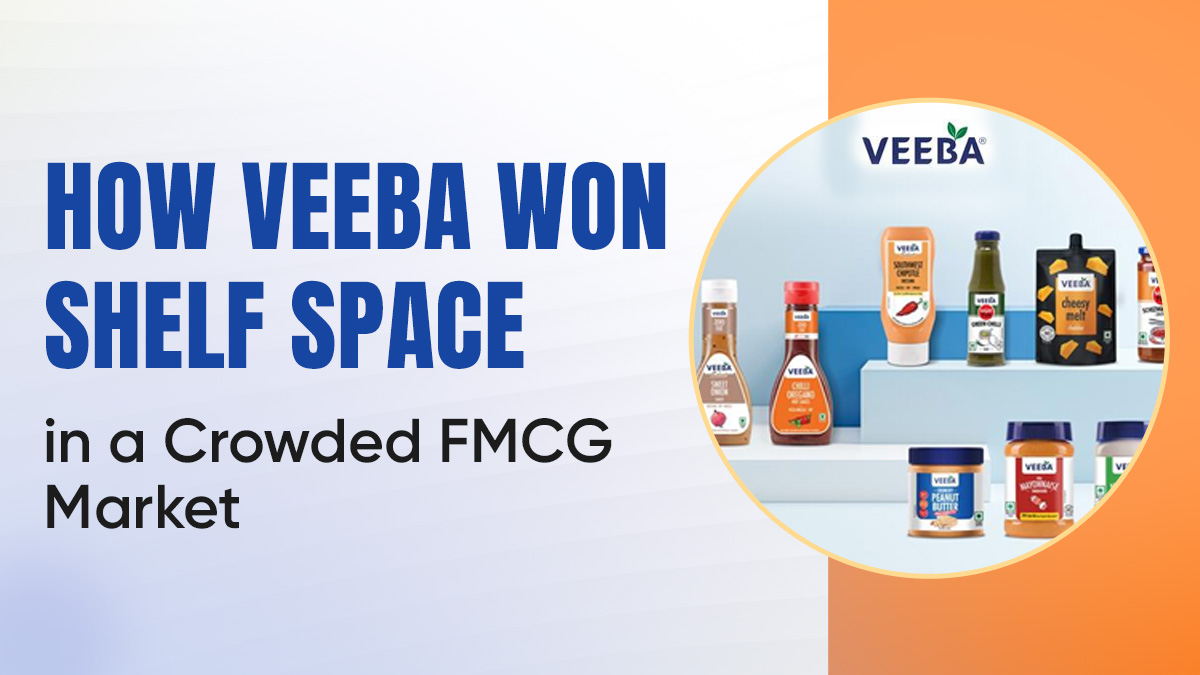
Clear glass packaging showing visible quality ingredients. Premium labels borrowed from upscale restaurants not bargain aisles. Before anyone tasted anything, the shelf presence itself said: this operates on a different level.
For founders: when differentiation runs this deep, the entire conversation changes. Retailers stop asking why they should stock something and start asking how quickly deliveries can happen.
How Did Veeba Turn Retailers From Gatekeepers Into Genuine Advocates?
Most startups treat retailers like obstacles to defeat. Veeba treated them like partners worth winning.
The strategy worked because it aligned everyone’s financial interests instead of asking anyone to take a leap of faith.
Higher margins first. Veeba offered retailers 5 to 10% more than legacy brands per unit. Identical shelf space, substantially more profit. That’s not a sales pitch. That’s just better math.
Then proven data. Pilot store locations received obsessive measurement attention. Sales speed, repeat purchase patterns, basket size impact. Everything tracked carefully. Then Veeba walked into expansion conversations carrying hard proof instead of promises. Our products move 30% faster than category averages. Retailers care about inventory turnover more than brand heritage. Fast moving stock means better cash flow. The numbers spoke for themselves.
Then precise targeting. Instead of mass marketing that burns money fast, Veeba focused exclusively on urban millennials and Gen Z home cooks who watch food content online and want quality without excessive hassle. This demographic doesn’t hunt for the cheapest option. They hunt for the best option at a reasonable price.
For founders: get every stakeholder’s incentives properly aligned and distribution challenges solve themselves. Nobody needs to do anyone a favour. The economics just make sense.
Why Did Indian Consumers Choose Veeba Over Brands They Had Been Buying Their Whole Lives?
Most FMCG brands fail at this exact point.
They sell products. Features. Benefits. Contains real tomatoes. No artificial colours. 30% reduced sodium. Boring messaging. Instantly forgettable. Easily replaceable.
Veeba sold something different entirely.
The genuine feeling of being skilled at cooking. The pride of hearing “this tastes like restaurant food” from someone at your dinner table. The confidence to invite friends over without ordering takeout. The deep satisfaction of making something genuinely delicious without attending culinary school.
“Bring restaurant taste home” wasn’t advertising language. It was an emotional promise. And every product delivered on that promise consistently.
Their social media became a cooking school not a sales pitch. YouTube videos teaching quick meal prep. Instagram showing unexpected ways to use their sauces. Blog posts helping stressed parents get dinner done faster. All practical. All useful. All shareable.
Food bloggers and home chefs became partners not paid promoters. Real kitchens. Real results that looked achievable. This built something advertising money cannot touch: actual trust.
The in-store demos sealed it. Watch someone turn a plain sandwich into something worth photographing in under two minutes, then taste it yourself. The purchase decision makes itself.
For founders: people don’t buy condiments. They buy the feeling of being capable. Sell the transformation. The product is just how it gets delivered.
Veeba vs. The Traditional FMCG Market Entry Playbook
| Dimension | Veeba’s Approach | Traditional FMCG Entry | Long-Term Outcome |
| Category strategy | Created a new category instead of fighting in existing ones | Launched a slightly better version of what already existed | Owned a space vs. fought for scraps |
| Retailer relationships | Gave retailers better margins and proven sales data | Asked retailers to take a chance on an unknown brand | Advocates vs. reluctant stockists |
| Product positioning | Restaurant quality gourmet for home kitchens | Better ingredients at competitive prices | Emotional identity vs. commodity |
| Marketing | Taught people how to cook better instead of telling them to buy | Advertising features and benefits nobody remembers | Community vs. interruption |
| Scaling | B2B infrastructure already built before consumer launch | Built manufacturing from scratch while managing demand | Ready to scale vs. quality chaos |
Key Takeaways
- Veeba built a ₹350+ crore business not by outspending the giants but by refusing to compete where the giants were unbeatable
- Mittal spent decades supplying restaurants and cafes before launching to consumers. That B2B background gave him something no startup pitch deck could buy: he already knew what actually tasted amazing
- Veeba offered retailers 5 to 10% higher margins than legacy brands. Simple math. Same shelf space, more profit. Retailers stopped being obstacles and became advocates
- They didn’t sell condiments. They sold the feeling of being a great cook. The sauce was just the delivery vehicle
- Food bloggers, home chefs, YouTube recipe videos, in-store demos: everything taught people how to cook better instead of telling them to buy something
- Mint Mayo. Chipotle Southwest. Peri Peri. Thousand Island with actual flavor complexity. These weren’t small improvements. They were flavors the giants ignored entirely
FAQ
Ques1: How did Veeba convince retailers to stock an unknown brand over established giants?
Ans1: By makingit the obvious financial choice. Higher margins per unit than legacy brands meant the same shelf space generated more profit. Then Veeba backed that up with real sales velocity data from pilot stores showing their products moved faster than category averages. Nobody had to take a chance. The numbers made the decision.
Ques2: What made Veeba’s product range genuinely different from Heinz andKissan?
Ans2: They went after the flavours the giants had completely ignored. Mint Mayo. Chipotle Southwest. Peri Peri. Thousand Island with actual complexity. These weren’t small improvements on existing products. They were the restaurant flavours Indian consumers already loved but couldn’t find on retail shelves. Veeba put them there first.
Ques3: How did Veeba’s B2B background give them an unfair advantage in consumer markets?
Ans3: Mittal spent decades watching restaurants serve bold internationalflavours while retail shelves stocked the same boring options from twenty years ago. He already had the manufacturing capability, the flavour knowledge, and the understanding of what actually tasted amazing at scale. When he launched to consumers he wasn’t guessing. He already knew what worked.
Ques4: How did Veeba build consumer trust without a big advertising budget?
Ans4: Theytaught people instead of selling to them. Recipe videos. Instagram ideas nobody had thought of. Food bloggers who actually cooked with the sauces. In-store demos where you tasted before you bought. When something is genuinely useful people share it. No budget required.
Ques5: What is the single most important lesson from Veeba for founders entering crowded markets?
Ans5: Don’tfight where the giants are unbeatable. Find the gap they’re ignoring, the customer they’ve written off, the flavour they decided wasn’t worth developing. Own that completely. Make sure retailers win, distributors win, and customers win. When everyone’s incentives are aligned the market opens up on its own. Veeba didn’t beat Heinz. They built something Heinz wasn’t even looking at.
Summary
A name nobody recognised. Bottles nobody had seen before. A request for shelf space in one of the most contested aisles in Indian retail.
No rational person would have bet on Veeba in 2013.
And yet within a few years Veeba had done something Heinz, Kissan, and Maggi with all their decades of dominance hadn’t managed: they made Indian home cooks feel like genuinely skilled chefs. Not through a better mayonnaise. Through a completely different idea of what a condiment could be.
Restaurant quality. Gourmet flavours. Accessible prices. An emotional promise that every product delivered on consistently.
That’s what changed the game. Not the sauce. The story around it. The feeling it created. The confidence it gave people standing in their own kitchens trying to make something worth being proud of.
Veeba didn’t walk into that supermarket aisle and fight the giants for their customers. They walked in and found the millions of Indian consumers the giants had never bothered to cook for.
That gap was always there. Veeba just had the clarity to see it and the conviction to fill it.
Note: Pattern analysis based on Veeba’s publicly available brand journey, founder interviews, and FMCG industry coverage.
