

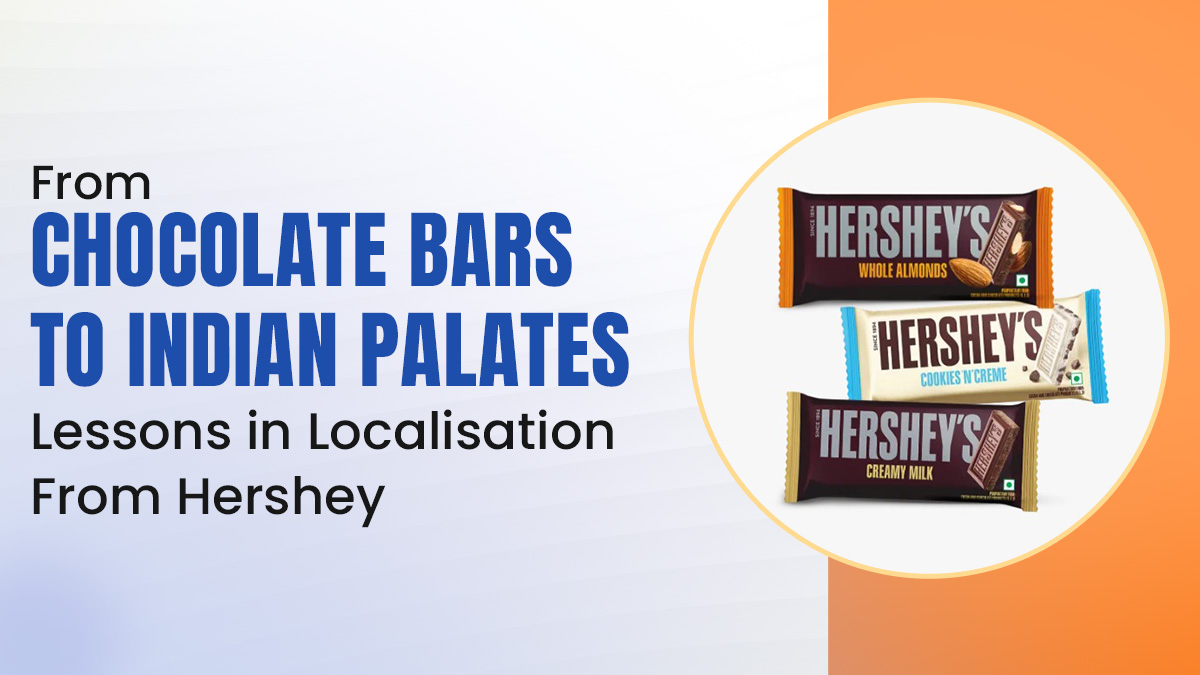
Estimated reading time: 9 minutes
Picture this. A boardroom in Pennsylvania, 2007.
Executives at one of America’s most iconic chocolate manufacturers are staring at a map of India. A country where chocolate is a luxury gift, not a Tuesday afternoon snack. The competition? Giants like Cadbury who’d been wooing Indian taste buds for decades. The challenge? Convincing a billion people that an American chocolate bar belongs in their lives.
Fast forward to today and Hershey isn’t just surviving in India. It’s thriving.
Here’s what most founders miss. This wasn’t a story of deep pockets winning the day. It was a masterclass in strategic thinking any entrepreneur can decode and apply.
Why Did Hershey Change Their Own Iconic Recipe to Win India?
Hershey didn’t walk into India and slap their classic chocolate bar on every shelf. They did something most founders are terrified to do. They changed their recipe.
Reduced sugar content by 20%. Introduced ₹5 and ₹10 pack sizes. Experimented with cardamom and rose flavours.
- This is a company whose recipe is literally iconic and they still changed it
- Consumer trust isn’t built by forcing your vision down people’s throats. It’s earned by showing up where they already are
- Stop trying to educate your market into loving your product exactly as it is
A SaaS founder spent eight months building a feature-rich platform for Indian SMBs. They didn’t bite. When he built a simpler, mobile-first “lite” version at one-third the price, customer acquisition costs dropped 60% and retention doubled.
Your product is an equation and local context is the variable you can’t ignore.
The Hershey India Localisation Framework
| Pillar | What It Involved | Evidence |
| 1. Recipe Localisation | Reduced sugar, changed pack sizes, experimented with local flavours like cardamom and rose | Consumer trust earned by adapting rather than demanding the market adapt to them |
| 2. Purpose-Driven Innovation | Chocolate syrups for milk, spreads for breakfast, baking chips for home cooks | Not novelty for its own sake. Solutions to actual behaviour gaps customers already had |
| 3. Multi-Tier Pricing Psychology | Premium bars, small packs, gift boxes, bulk retailer options | Each price point solved a different emotional need not just a different budget |
| 4. Trust Through Consistency | Uncompromising food safety, global manufacturing standards, authentic festival storytelling | Consistency plus transparency plus cultural sensitivity is what built consumer trust from zero |
How Did Hershey Find Innovations That Actually Moved Sales Instead of Just Sounding Impressive?
Most founders confuse innovation with novelty. They chase shiny trends instead of solving boring problems.
Hershey’s innovation engine in India wasn’t about wild new chocolate bar concepts. It was systematic. Chocolate syrups for milk. Spreads for breakfast. Baking chips for home cooks.
The framework underneath it: spot the behaviour gap where customers are trying to do something with products that aren’t quite right. Test narrow in one city, one channel, one segment. Scale only what works instead of scaling failures you’re emotionally invested in.
A Bangalore bakery noticed customers wanted healthier options but got paralysed by too many choices. They tested one swap: jaggery instead of sugar. That single change drove 35% more repeat visits.
For founders: relevance beats revolution every time. You don’t need a breakthrough. You need to notice what people are already struggling to do with what exists.
How Did Hershey Use Pricing to Create Multiple Emotional Entry Points Into the Brand?
Hershey’s pricing wasn’t just about affordability. It was about creating multiple ways into the brand story.
Premium bars for aspiration. Small packs for impulse. Gift boxes for celebration. Bulk options for retailers. Each price point solved a different emotional need not just a different budget level.
The architecture: a ground floor low-risk trial that builds trust. A main floor where the core value and real money live. A penthouse of premium options for the customers ready to go further.
A consultant charged a flat ₹50,000 for her service. When she split it into a ₹5,000 audit, a ₹50,000 implementation, and a ₹2 lakh full-service package, revenue tripled. Same service. Different psychology.
Customers don’t buy products. They buy better versions of themselves. Your pricing should reflect every version of that transformation.
How Did Hershey Earn Trust in a Country That Had Zero Reason to Trust an American Chocolate Brand?
In 2007 Indian consumers had no reason to trust an American chocolate brand.
Hershey’s trust-building playbook was deceptively simple. Uncompromising food safety standards. Manufacturing technology matching global benchmarks. Marketing campaigns that celebrated Diwali and local festivals with genuine storytelling not surface-level appropriation.
The equation: consistency plus transparency plus cultural sensitivity equals trust.
A D2C skincare brand grew entirely on trust-based marketing. Instead of celebrity endorsements they shared lab reports, ingredient sourcing, even production failures on Instagram. That vulnerability turned customers into evangelists. Customer acquisition through referrals became nearly free.
For founders: trust is your compound interest. It grows slowly but becomes your most valuable asset.
Why Did Hershey Partner Instead of Trying to Build Everything Themselves?
Hershey didn’t bulldoze competition or build everything in-house. They partnered strategically.
With local distributors who understood 6.5 million kirana stores. With regional players who had last-mile delivery already figured out.
The filter for who to partner with: who has what you lack, whether that’s distribution, credibility, or technology. Who shares your values around quality and customer-first thinking. Who benefits if you succeed, meaning complementary businesses not competitors.
A tech startup partnered with CA firms instead of selling directly to businesses. CAs got better tools. The startup got instant credibility and warm leads.
Win-win isn’t a cliché. It’s a business model when done right.
Hershey vs. The Typical Global Brand Market Entry Playbook
| Dimension | Hershey’s Approach | Typical Global Brand | Long-Term Outcome |
| Product adaptation | Changed the actual recipe, pack sizes, and flavours for India | Kept the global product and hoped the market adapted | Trusted local presence vs. foreign import that never landed |
| Innovation strategy | Solved real behaviour gaps: syrups, spreads, baking chips | Chased novelty and flashy new product concepts | Products people actually needed vs. products nobody asked for |
| Pricing | Multiple tiers solving different emotional needs | Single global price point translated to local currency | Accessible everywhere vs. accessible to a narrow segment |
| Trust building | Consistency, transparency, authentic cultural storytelling | Awareness campaigns without operational proof behind them | Compound trust vs. surface-level recognition |
| Distribution | Partnered with local distributors and regional players | Tried to build distribution from scratch or ignored the long tail | Reached millions of kirana stores vs. limited to major retail |
FAQ
Ques1: Why did Hershey change their globally iconic chocolate recipe specifically for the Indian market?
Ans1: Because you can’t just show up in a new country and expect people to change their taste for you. Hershey cut back the sugar, made smaller packs people could actually afford to try, and even played around with cardamom and rose. It wasn’t about diluting the brand. It was about showing India they’d actually bothered to listen instead of just dumping the same bar on a new shelf.
Ques2: How did Hershey’s innovation strategy differ from typical product launches?
Ans2: They focused on solving actual behaviour gaps instead of chasing novelty. Chocolate syrups for milk, spreads for breakfast, baking chips for home cooks: each one answered a real question about how Indian consumers wanted to use chocolate differently than Americans did. That’s systematic innovation rooted in observation, not innovation for the sake of appearing exciting.
Ques3: Why did Hershey use multiple pricing tiers instead of one straightforward price?
Ans3: Because different customers needed different emotional entry points into the same brand. A small impulse pack solves a different need than a premium gift box. By building pricing tiers Hershey let customers choose their own relationship with the brand rather than forcing everyone into the same purchase decision.
Ques4: How did Hershey build trust in India when they had no existing reputation there?
Ans4: Slowly, and mostly by just doing the boring stuff right for a long time. Keeping food safety standards genuinely high. Matching the manufacturing quality people expected from a global brand. Showing up for Diwali in a way that felt real, not like a marketing checkbox. Trust doesn’t arrive with a campaign. It builds one consistent year at a time, and Hershey seemed to actually understand that instead of trying to rush it.
Ques5: What is the single most important lesson from Hershey’s India strategy for founders entering new markets today?
Ans5: Don’t stop at translating your words. Translate your actual product. Hershey didn’t just put Hindi on the packaging and call it a day. They changed what was inside the wrapper, how much it cost, and how they earned people’s trust. The founders who actually win new markets are the ones willing to look at the thing they thought was untouchable about their product and change it anyway.
Summary
A 130-year-old American chocolate company walked into one of the world’s most complex markets and succeeded. Not through brute force or deep pockets. Through strategic thinking any founder can apply regardless of size.
They changed their iconic recipe. Built pricing tiers that solved different emotional needs. Found innovation in real behaviour gaps instead of chasing shiny trends. Built trust through consistency instead of a single campaign. Partnered with people who had what they lacked instead of trying to build everything alone.
Hershey succeeded in India not because they made the best or cheapest chocolate. They succeeded because they showed Indians something simple: we see you, we respect your tastes, we’re willing to change for you.
That’s not just a business strategy. That’s a relationship.
You’re not too small to think like Hershey. You’re actually better positioned. More nimble, closer to your customers, able to adapt faster than any giant company weighed down by its own legacy.
Your chocolate bar might be a mobile app. Your India might be a new customer segment you haven’t fully cracked yet. The playbook works the same.
What’s the one thing about your product, pricing, or positioning you’ve been afraid to change? That’s probably where your breakthrough is hiding.
Success isn’t about having the perfect recipe.
It’s about being willing to adjust it until it tastes like home.
Note: Pattern analysis based on Hershey’s publicly available market entry strategy, product communications, and Indian confectionery industry reporting.
