Estimated reading time: 6 minutes
Think about this.
We have all been there. Download a language app with big plans—maybe a New Year’s resolution to finally learn Spanish. Practice for a few days, feel good, then life hits. The app disappears under other icons, and the dream of speaking a new language quietly dies.
But what if it didn’t? What if an app was so addictive, you felt guilty every time you skipped a day? What if a cartoon owl became so famous he could sell out Halloween costumes in minutes and make you genuinely nervous if you didn’t finish your lesson?
That’s Duolingo. Not just an ed-tech company. A masterclass in turning a chore into something people obsess over.
From a Simple Idea to an Unbreakable Habit
Luis von Ahn, the co-founder, wasn’t just building a language app. He was tackling a massive global problem: how do you give free education to millions in a way that’s sustainable? He knew the challenge wasn’t content—it was getting people to show up, stay motivated, keep coming back.
He looked at the game. They figured out the secret. That rush when you level up. The urgency when you’re close to a high score. The community is with other players.
So, he built the app like a game, not a textbook.
The Gamification Blueprint: Not Just Slapping Badges on Things
Duolingo didn’t just add badges and call it done. They rebuilt the entire learning experience around human psychology.
The Streak. That simple number in the corner became your most precious possession. It created an emotional investment. That green flame wasn’t just a streak—it was proof of your willpower, your commitment, your progress. Breaking it fel t betrayal.
XP and Leaderboards. Every lesson gave you points (XP), and those points moved you up a leaderboard. You weren’t just competing against yourself—you were competing against friends, family, strangers. Turned daily practice from task into game you had to win.
Badges and Achievements. The app celebrated every tiny victory with a badge. You didn’t just finish a level—you “completed the first week” or “mastered basic greetings.” Each badge was a dopamine hit, visual proof you were winning.
Von Ahn and his team didn’t make a learning app. They made an experience where you were constantly celebrated, challenged, rewarded. That’s why people didn’t just use it—they got hooked.
Your Product Is Your Marketing Team
While most startups burned millions on paid ads, Duolingo did something different. They focused on making the product so good, so irresistible it became a marketing machine on its own.
They baked virality into the app. Finish a lesson or earn a badge? The app made sharing your progress ridiculously easy. Users weren’t just learning—they were broadcasting achievements to their networks.
Result? 350% growth acceleration. Not from massive ad budgets, but from people telling other people, “Hey, look what I just did.”
The product wasn’t just a tool. It was a conversation starter.
The Owl That Became a Star: Building a Vibe, Not Just a Brand
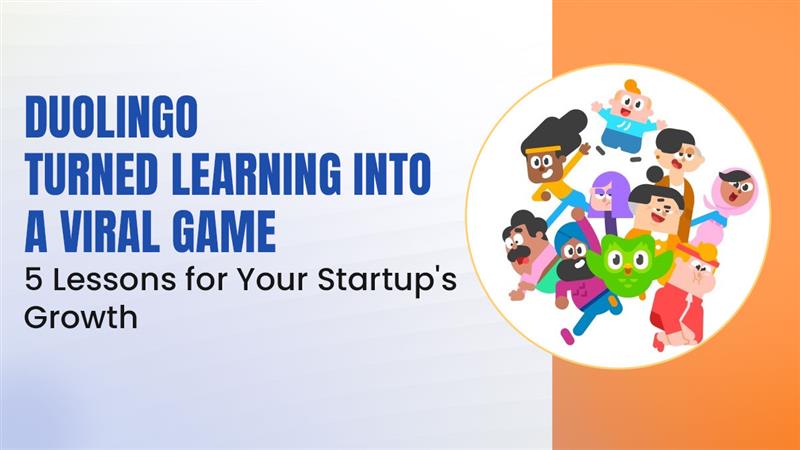
Next step? Create a personality everyone would remember. Enter Duo, the owl.
Duo wasn’t just a logo. He was mischievous, slightly unhinged. On social media, Duolingo didn’t post corporate updates. They meme-jacked viral moments, poked fun at themselves, acted like a person, not a company.
The team got it—to connect with a new generation, be where they are and speak their language. On TikTok, Duo became a cultural icon, racking up millions of views by being funny and a little creepy.
They built a brand that didn’t take itself seriously. In doing so, created an emotional connection far beyond language learning. People didn’t just know Duolingo—they felt in on the joke.
Building a Community, One Streak at a Time
Duolingo’s power isn’t just individual. It’s collective. The app didn’t just make learning a game—it made it a shared experience.
Easy to follow friends, see their progress, compete in leagues. Created social accountability. You didn’t want to let friends down. Definitely didn’t want them passing you on the leaderboard.
This is community-led growth. Users weren’t using the app just for themselves—they were using it because their friends were, creating a powerful, self-sustaining loop. Transformed a solitary activity into group sport.
Innovation as a Promise, Not a Feature
Duolingo’s journey wasn’t just clever marketing and fun graphics. Underneath was relentless focus on improving the learning experience itself. Learning company first, growth company second.
Used data to constantly refine courses, personalizing learning paths for each user. Added music and math lessons, proving they were thinking beyond language. Every tweak, every feature driven by one question: “Does this help people learn better?”
This commitment to their core mission kept them ahead. While others copied features, Duolingo was perfecting the art of teaching.
Lessons for Your Own Journey
Duolingo’s story proves the most successful companies don’t just sell a product—they sell an experience.
- Passion over Promotion. Best marketing comes from a product so good users can’t help talking about it.
- Feelings over Features. People remember how your product made them feel. Smart? Motivated? Part of something?
- Vibe over Brand. Authentic, human voice cuts through noise better than polished corporate speak.
- Community is King. Turn users into a tribe. Loyalty and advocacy of strong community beats big ad budgets every time.
- Focus on Foundation. No amount of gamification or marketing saves a bad product. Core value has to be solid.
“We want to make sure that the experience is so fun that it almost feels like a game and you want to do it all the time.” — Luis von Ahn
Duolingo didn’t just teach language. They taught us that with creativity and heart, you can turn tedious tasks into delightful daily habits. Didn’t just build an app—built a movement.
That’s why an unassuming green owl became a global icon for learning. Didn’t just help people learn a new language. Helped them fall in love with the process.
