

Estimated reading time: 10 minutes
Remember that sharp, medicinal smell from childhood? The one that meant your scraped knee was about to sting, but you’d be okay?
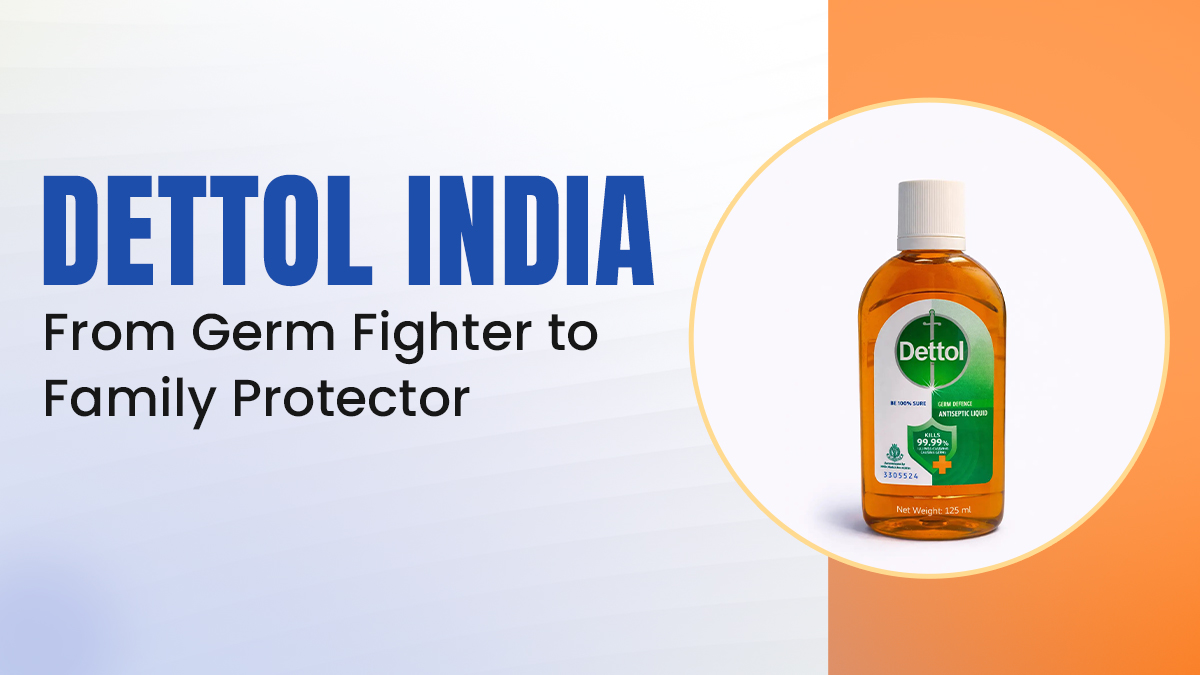
That smell was Dettol. And if you’re a parent now, you’re probably reaching for that same brown bottle when your kids get hurt.
That’s not luck. That’s trust passed down through generations.
How Did a Hospital Antiseptic End Up in Every Indian Kitchen Cabinet?
In 1932 Dr. Joseph Lawrence created Dettol to solve a deadly problem. Infections were killing people after surgeries. Hospitals needed something strong enough to eliminate germs without causing more damage.
Medical professionals started using it. Surgeons trusted it. The reputation spread through healthcare circles fast. This wasn’t marketing. It was proven results in life-or-death situations.
Most companies would have stopped there. Hospital contracts are profitable and stable. Why risk entering the chaotic consumer market?
- Dettol spotted something crucial. Indian families were fighting the same infectious diseases hospitals dealt with daily
- Mothers wanted protection but couldn’t tell which hygiene products actually worked versus which just claimed to
- Dettol brought the exact hospital formula to regular households. Same brown bottle. Same standards. No watering down to cut costs
When you bring expertise to a new market never dilute what made you credible originally. That decision to maintain medical-grade quality for household use became Dettol’s foundation.
The Dettol Trust-Building Framework
| Pillar | What It Involved | Evidence |
| 1. Never Dilute the Formula That Earned Trust | Brought hospital-grade antiseptic to households without cutting quality | Same brown bottle, same medical standard, trusted first by surgeons then by families |
| 2. Teach Before You Sell | Educated an entire country about invisible germs instead of just marketing antiseptic | Created an entirely new category, germ protection, instead of fighting for soap market share |
| 3. Expand Only Where Trust Actually Fits | Moved from antiseptic to handwash to soap to surface cleaners | Every product reinforced the same promise instead of stretching into unrelated categories |
| 4. Guard the Premium With Zero Compromise | Priced above market and never cut corners despite constant price pressure | Trust premium only survives with flawless delivery, every batch, every year, without exception |
How Did Dettol Create an Entire Market Instead of Just Selling a Product Into an Existing One?
In the 1950s ask an Indian family about germs and you’d get blank stares. Clean meant no visible dirt. Nobody thought about invisible bacteria spreading disease through touch.
Dettol didn’t just sell antiseptic liquid. They educated an entire country.
Their campaigns showed what eyes couldn’t see. Bacteria under microscopes. Germs multiplying on surfaces. Disease spreading through unwashed hands. They taught kids in schools how to wash hands properly and partnered with medical professionals spreading awareness about daily hygiene.
This wasn’t advertising. This was health education.
- Dettol stopped competing with other soap products and created an entirely new category
- When you teach people about problems they didn’t know existed and position yourself as the solution, you’re not fighting for market share. You’re building the entire market
- And you’re already the trusted name once that market exists
The consumer isn’t a moron. She is your wife. You insult her intelligence if you assume a mere slogan will persuade her to buy anything. Dettol educated, never manipulated.
How Did Dettol Expand Into New Products Without Ever Breaking the Trust They’d Built?
Once Dettol owned wound care they faced the expansion challenge every growing brand hits. How do you grow without destroying what made you special?
Many brands fail here. They get greedy, slap logos on random products, and customers feel betrayed.
Dettol asked one question instead. Where else do families need our germ-fighting expertise?
- That led to liquid handwash, same benefit but for preventing illness daily not just treating wounds
- Then soap products bringing medical protection to bathing
- Then surface cleaners for kitchens and bathrooms where germs spread
Every expansion made perfect sense. A mother trusting Dettol antiseptic for cuts could naturally trust Dettol handwash for family health. The brand never jumped randomly. It stepped carefully within its credibility zone.
Expansion isn’t about what else you can sell. It’s about where your core promise genuinely helps. Dettol’s germ-fighting credibility fit handwash, soap, and cleaners perfectly. It wouldn’t have fit clothing or food.
Better yet, each product strengthened the others. Buying handwash reminded you about soap. Using surface cleaner prompted stocking antiseptic liquid. The products built a complete protection ecosystem.
Why Do Families Keep Paying More for Dettol When Cheaper Options Sit Right Next to It on the Shelf?
India’s consumer market is brutally price-sensitive. Families compare every rupee. Competitors undercut constantly.
Yet Dettol costs more than alternatives. Always has. Families buy it anyway, generation after generation.
Because Dettol became peace of mind, not just a product.
- When mothers choose handwash for kids they’re not calculating rupees. They’re thinking about which one actually protects children from illness
- Ten rupees becomes meaningless when your child’s health is the stakes
- This is the trust premium. When reliability runs deep enough price comparisons stop mattering
For founders: solve problems people genuinely care about and prove it consistently. Price becomes secondary to certainty.
But you can’t fake this. Trust premium only works with actual delivery, every time, without exception. One safety failure. One weak formulation. One corner cut. The premium vanishes.
Dettol maintained hospital standards because their business model depended on trust. That’s expensive. It demands investment in research, quality control, ingredients. But it’s what separates lasting brands from those that crash.
Why Did Dettol Keep Improving the Formula Instead of Just Redesigning the Bottle?
While competitors redesigned packaging and hired celebrities, Dettol did something less flashy but infinitely more valuable. They kept improving the actual formulation.
Every few years Dettol reformulates to fight new pathogens, meet updated health standards, and boost effectiveness. They develop gentler versions that maintain germ-killing power but stay safer for daily use. They create better formats, foam pumps, no-touch dispensers, making protection easier.
- Most customers never notice. They just know Dettol works, year after year
- Entrepreneurs commonly innovate where people can see it: fancy features, viral stunts
- Dettol innovates where it actually matters: making the product better at its core job
Your grandmother’s brown bottle worked great. Today’s formula works even better. Different science, same trust. The brand evolves while the promise stays solid.
Dettol vs. The Typical Consumer Health Brand Playbook
| Dimension | Dettol’s Approach | Typical Health Brand | Long-Term Outcome |
| Entering a new market | Kept the exact hospital-grade formula for household use | Diluted the formula to hit a lower price point | Trust maintained vs. trust diluted |
| Market creation | Educated the country about invisible germs before selling protection | Competed for existing market share with claims and slogans | Category ownership vs. crowded competition |
| Expansion | Only into categories where the germ-protection promise genuinely applied | Expanded into unrelated categories chasing revenue | Reinforcing ecosystem vs. diluted identity |
| Pricing | Premium priced and never discounted on quality | Competed on price to win price-sensitive shoppers | Loyalty that survives price comparison vs. race to the bottom |
| Innovation | Reformulated quietly to stay effective against new threats | Redesigned packaging and chased trends | Product that actually improves vs. surface level change |
FAQ
Ques1: How did Dettol earn enough trust to charge more than every competitor on the shelf?
Ans1: By never once cutting the quality that earned that trust in the first place. Dettol brought the exact hospital-grade formula into homes and kept it there for decades, reformulating only to get more effective, never to get cheaper. That consistency, delivered without exception, is what let families stop comparing prices and just reach for the brown bottle out of instinct.
Ques2: Why was educating the market such an important part of Dettol’s early strategy?
Ans2: Because in the 1950s most Indian families had no concept of invisible germs. Dettol couldn’t sell germ protection to people who didn’t believe germs were a threat worth protecting against. So they taught the country about bacteria and disease spread before selling the solution, which meant they weren’t fighting for market share in an existing category. They were creating the category and becoming its trusted name simultaneously.
Ques3: How did Dettol decide which new products to launch without diluting the brand?
Ans3: By asking one consistent question: where else do families need our germ-fighting expertise? Handwash, soap, and surface cleaners all extended the same core promise into new daily moments. They never expanded into categories like clothing or food where the germ-protection credibility wouldn’t naturally apply. That discipline kept every new product reinforcing the brand instead of confusing it.
Ques4: Why does Dettol’s trust premium survive so consistently despite India’s brutal price sensitivity?
Ans4: Because the stakes customers associate with the product are their family’s health, not a minor convenience. When the decision is about protecting a child from illness, a price difference of a few rupees becomes genuinely irrelevant. That premium only holds because Dettol has never given customers a reason to question whether the product actually delivers what it promises.
Ques5: What is the single most important lesson from Dettol for founders building trust-dependent brands today?
Ans5: Never compromise on the thing that earned the trust in the first place, even when cutting corners would be more profitable in the short term. Dettol maintained hospital-grade standards for ninety years because their entire business model depended on that reliability being absolute. Trust takes years to build and seconds to destroy. Guard whatever earned it as fiercely as the business itself.
Summary
That sharp medicinal smell from childhood wasn’t an accident of chemistry. It became a signature, a signal that said this actually works, passed from parent to child without anyone needing to explain why.
Dettol built that inheritance the hard way. They kept the exact formula that earned trust in hospitals when they moved into homes. They educated an entire country about a threat nobody could see before selling the solution to it. They expanded only where their core promise genuinely applied and refused to chase revenue into categories that would have diluted what they stood for. They priced above the market and never once used quality as the place to cut costs when margins got tight.
None of it was flashy. Much of it was genuinely boring, unglamorous, expensive discipline maintained for decades without a single dramatic moment worth a headline.
But that discipline is exactly what creates a brand parents pass down to their children without a second thought. The kind of trust that doesn’t get shopped around when it matters most.
The germ fighter became a family protector because it fought for families relentlessly, never stopping, never cutting the corner that would have made things easier in the moment.
What promise can you make that’s valuable enough people trust you with what matters most? What would keeping that promise for ninety years actually require of you?
Start there.
Note: Pattern analysis based on Dettol’s publicly available brand history, product communications, and Indian consumer health industry reporting.
