

Estimated reading time: 7 minutes
How two friends turned India’s favorite dumpling into a 600+ outlet empire and what every founder can learn from their journey
There’s a moment in every founder’s journey when the room goes quiet. When investors lean back, cross their arms, and ask: “But why this?”
For Sagar Daryani and Binod Homagai in 2008, the question was even tougher: “You want us to bet on. momos?”
Not burgers. Not pizza. Not fried chicken like the global brands dominating fast food India. Just momos, those humble Tibetan dumplings sold by street vendors for ₹20.
Today, Wow! Momo runs over 600 outlets nationwide. They didn’t just build another fast food chain. They built a category that didn’t exist before. And the blueprint they created? It’s pure gold for any founder trying to turn an idea into an empire.
The Problem Everyone Ignored
Here’s what made Wow! Momo different from the start: they didn’t try to compete with established food brands. They looked at what those brands were missing.
Walk through any Indian city in the 2000s, and you’d see the pattern. Western fast-food chains owned the organized retail space. Street vendors owned the authentic taste space. But nobody owned the middle, the space where millions of Indians actually lived.
People loved momos. They craved that steaming hot comfort after college, after work, on weekend outings. But they hated the inconsistency. One day, the vendor’s momos were perfect. The next day, they were soggy or oversalted. And the hygiene concerns? Those kept families away even when they were tempted.
Sagar and Binod saw this gap not through fancy market research reports, but through obsessive observation. They stood outside colleges. They watched food courts. They talked to students, office workers, families. They saw the same pattern: love the product, hate the experience.
That’s where most founders miss the opportunity. We look at markets through data when we should be looking through people’s eyes.
The Revolution Hidden in Plain Sight
The genius of Wow! Momo’s innovative approach wasn’t inventing something new. It was reimagining something familiar.
They asked a simple question: What if street food could be reliable?
Not fancy. Not premium. Just dependable.
This became the heart of their business model. While other food service brands competed on taste superiority or price wars, Wow! Momo competed on something more powerful—trust.
Their promise was elegant: “The momo you love, exactly how you expect it, every single time.”
Think about what that meant in practice. Every outlet whether in a mall food court, a standalone store, or a kiosk, delivered the same taste, the same quality, the same experience. In a country where even the best street vendors have off days, consistency became their superpower.
This is customer centric service in its purest form. They didn’t ask, “What can we sell?” They asked, “What does our customer need to feel safe choosing us?”
As marketing legend Seth Godin says: “People do not buy goods and services. They buy relations, stories, and magic.”
Wow! Momo understood this intuitively. They were selling the magic of street food wrapped in the relationship of reliability.
The Business Model That Broke Convention
Let’s talk money. Because passion doesn’t scale without smart economics.
Traditional thinking in the food and beverage industry was rigid: get prime real estate, maximize footfall, maintain high margins. Wow! Momo flipped this completely.
Their revenue model was built on format flexibility. They didn’t limit themselves to one store type. Food courts for high traffic. Standalone outlets for brand presence. Kiosks for quick service. Cloud kitchens for delivery optimization.
This wasn’t just about being everywhere. It was strategic warfare against the biggest enemy of fast food chain growth: high real estate costs.
By adapting their format to opportunity rather than forcing opportunities to fit their format, they could enter markets faster, test cheaper, and scale smarter. Their unit economics were beautiful lower costs, higher throughput, and a centralized preparation model that maintained quality while reducing complexity.
But here’s what most people miss: their aggressive growth wasn’t about speed alone. It was about building barriers before competition could organize.
Every new city they entered, every cluster of outlets they opened, every customer they converted these weren’t just revenue points. They were defensive positions. By the time other brands realized organized momo retail was a category worth entering, Wow! Momo had already built the fort.
Understanding the Customer’s Heart
The difference between good brands and great brands isn’t in what they sell. It’s in what they understand about why people buy.
Wow! Momo’s deep grasp of consumer behavior went beyond demographics. They understood emotional triggers.
Momos weren’t just food. They were comfort during exam stress. They were celebration after a college fest. They were the safe indulgence when you’re broke but want something that feels special. They were nostalgia for anyone who’d grown up in North or East India.
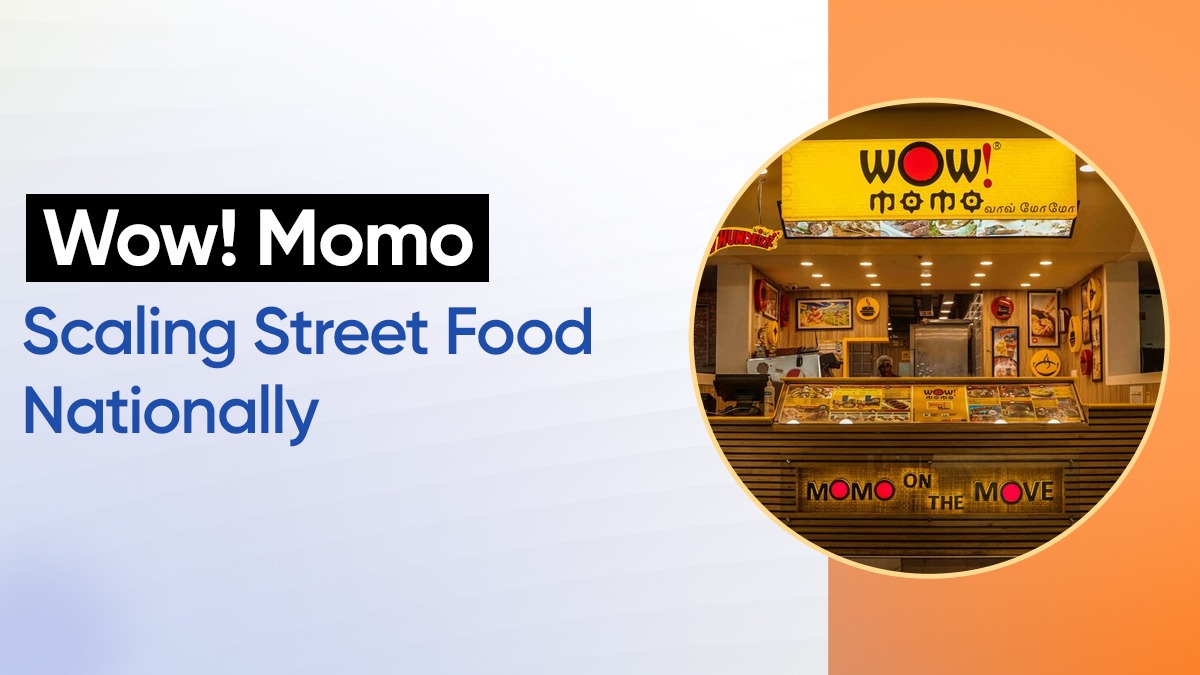
Their branding strategy never tried to make momos aspirational in the Western sense. They kept the soul casual, comforting, accessible, while upgrading the experience. Their outlets felt like evolved street stalls, not sterile corporate spaces. Open kitchens. Visible steam. Casual energy.
This authentic positioning became their moat. Competitors could copy the menu. They couldn’t copy the emotional connection.
The Marketing That Felt Like Conversation
While established food service brands were spending millions on TV ads and billboards, Wow! Momo was building something more powerful: a community.
Their marketing strategy was digital-first before digital-first was mandatory. Social media wasn’t a broadcast channel it was their conversation space. They engaged, they responded, they turned customers into advocates.
They launched quirky products that became social currency: Momos in a sizzler. Chocolate momos. Each launch was designed not just to drive sales but to create shareable moments.
And their use of food service channel innovation particularly cloud kitchens wasn’t just operational efficiency. It was strategic presence. They could be in your neighborhood without the cost of a physical outlet, reaching customers through delivery apps while maintaining their quality promise.
What This Means for You
If you’re building something anything here’s what Wow! Momo’s journey teaches:
Consistency beats perfection in untrusted categories. If your market has reliability issues, being dependable is your fastest path to leadership.
Format flexibility is a competitive weapon. Don’t force your business into one model. Adapt your delivery to where opportunity exists.
Emotional connection is your moat. Competitors can copy products. They can’t copy feelings. Build your brand around what your product means, not just what it is.
Use technology to enhance tradition, not replace it. The brands winning today aren’t choosing between old and new they’re blending both.
Scale through systems, not just ambition. Wow! Momo grew to 600+ outlets not by wanting to grow, but by building systems that made growth inevitable.
Your Turn
Right now, someone is looking at your industry the way Sagar and Binod looked at momos in 2008. They’re seeing the gap everyone else ignores. They’re noticing the problem customers have accepted as unchangeable.
Maybe that someone is you.
The question isn’t whether opportunities exist. They always do. The question is whether you’re willing to see them not through trend reports and competitor analysis, but through the frustrated eyes of customers who keep choosing between imperfect options.
Wow! Momo didn’t become a global brand contender by having the biggest budget or the best connections. They did it by caring obsessively about one thing: making the food people already loved reliable enough to trust.
That’s not a momo strategy. That’s a blueprint for building anything that lasts.
Start small. Obsess deeply. Build systems. Stay authentic. Scale deliberately.
Your category-defining brand isn’t waiting for perfect conditions. It’s waiting for you to start.
At Believers Destination, we help founders turn ambitious visions into sustainable realities. Because every national brand started as someone’s “crazy” idea, until it wasn’t.
