

Estimated reading time: 11 minutes
It’s 1993. A Sony executive named Ken Kutaragi walks out of a collapsed partnership meeting with Nintendo.
He had one idea on the way out.
We’ll do it ourselves.
At that moment it was just a failed deal. He had no idea that decision would spark the creation of a brand that would define a generation of gaming and eventually become home to 124 million players worldwide.
PlayStation’s Four-Pillar Brand Framework
| Pillar | What It Involved | Evidence |
| 1. Console as Gateway Not Just Hardware | Three beliefs held without compromise: a console is a gateway to exclusive worlds, emotion matters more than specs, community beats product | Didn’t chase Nintendo’s family-friendly aesthetic or Sega’s arcade speed. Asked what gamers truly wanted and built toward that |
| 2. Built From Actually Playing the Games | Ken Kutaragi and his teams played everything. Listened to developers, players, and critics. Experienced every glitch and every plot twist | Exclusive content strategy that came from genuine understanding of what made a game feel personal not just impressive |
| 3. Turning Players Into a Tribe | PlayStation Network, State of Play broadcasts, online friend groups, clans, YouTube communities | 124 million players who belong to something. Not a customer base. A family |
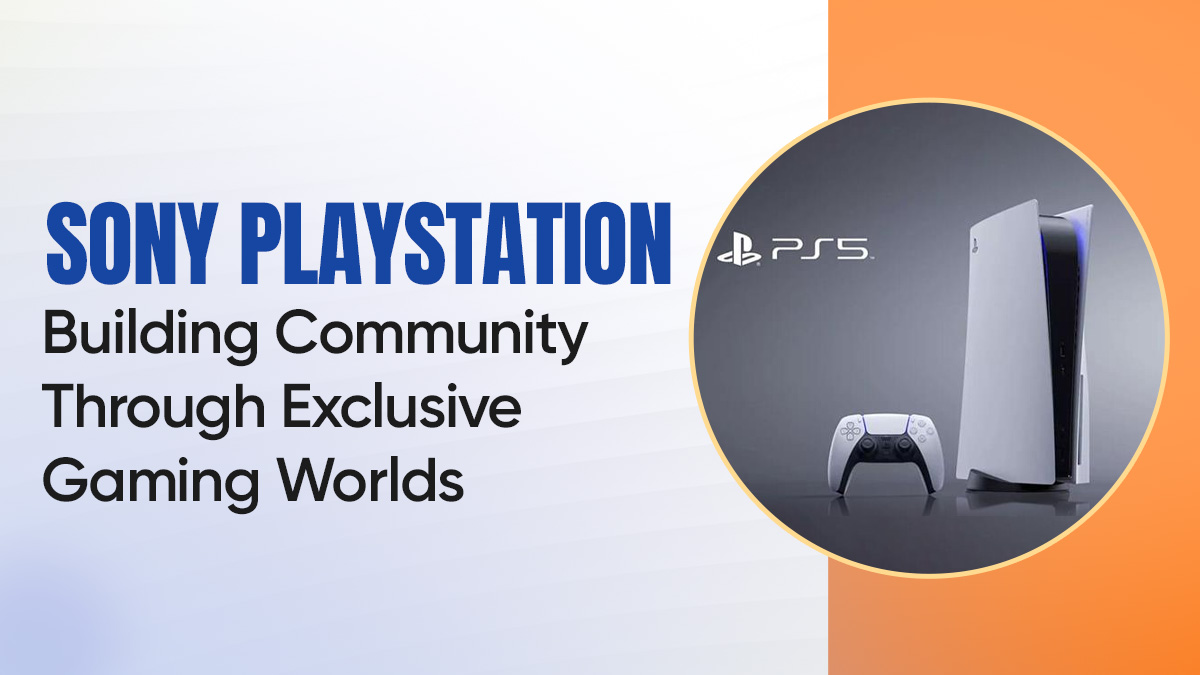
| 4. Technology That Deepened the Experience | PS5 SSD that enabled instant teleportation between worlds. DualSense haptics that made you feel every raindrop. Share button that turned gaming into conversation | Hardware decisions made in service of feeling not spec sheet bragging |
What Did Sony See in Gaming That Nintendo and Sega Had Stopped Looking For?
By the mid-1990s the gaming industry was a two-horse race.
Nintendo owned family-friendly. Sega owned fast and edgy. And between those two positions every other player in the market was trying to fit into one box or the other. Sony walked in as a newcomer with no gaming heritage and got laughed at.
What they had instead of heritage was a question nobody else was asking.
What do gamers truly want?
Not what do they currently have. Not what are competitors currently offering. What do they actually want that nobody is giving them?
Three beliefs came out of that question and every PlayStation decision since traces back to them. A console is a gateway to exclusive worlds not just a box that plays games. Emotion and story matter more than processing speed and technical specifications. And building a community is worth more than selling a product.
- They rejected the family-friendly aesthetic that felt safe and the arcade speed that felt familiar
- They built toward something neither competitor was offering: narrative-driven immersive experiences that made gaming feel personal
- That positioning created a space Sony could own completely rather than competing for territory someone else already held
For founders: don’t chase the competition’s playbook. The most valuable market positions are usually the ones nobody is currently standing in. PlayStation found one in 1994 and built an empire inside it.
How Did Actually Playing the Games Change What PlayStation Built?
Ken Kutaragi didn’t manage the gaming division from a boardroom.
He played the games. His teams played the games. They listened to developers who were frustrated by hardware limitations. They listened to players who wanted more than what existed. They experienced every glitch, every plot twist, every moment where the technology got in the way of the feeling and every moment where it disappeared and the world took over.
That experience changed everything about the decisions that followed.
The exclusive content strategy didn’t come from a market analysis report. It came from understanding at a felt level what made a game stop being entertainment and start being personal. What made you think about a character days after you’d put the controller down. What made you call a friend at midnight because you needed to talk about what just happened in the story.
- Hardware decisions were made to serve specific emotional experiences not to win spec comparisons
- Developer relationships were built around enabling worlds that could only exist on PlayStation
- The console became a stage for exclusive experiences rather than a general-purpose machine that played whatever was available
For founders: you cannot understand what your product should be from a comfortable distance. Kutaragi played the games. That’s the whole story of why PlayStation’s game-first philosophy felt different from everyone else’s hardware-first approach.
How Did PlayStation Turn 124 Million Individual Players Into Something That Felt Like a Family?
While other companies were marketing with bits and processing benchmarks, PlayStation focused on something different.
Feeling.
Their campaigns never led with technical specifications. They showed freedom. Friendship. Powerful stories playing out between people who cared about the same things. The console wasn’t the point. What the console made possible between people was the point.
Then someone at Sony noticed something interesting.
Players weren’t just finishing games and moving on. They were hanging around. Discussing characters. Debating story choices. Sharing clips of moments that had genuinely moved them. The game was over but the conversation wasn’t.
That observation became the share button. One feature. Built entirely from watching how players naturally behaved rather than from a features roadmap.
- PlayStation Network gave players a place to belong between gaming sessions
- State of Play broadcasts turned product announcements into community events
- YouTube filled with fan theories, gameplay commentary, and genuine enthusiasm that no marketing team planned
124 million players promote PlayStation not because anyone asks them to but because belonging to the PlayStation community feels like something genuinely worth being part of.
For founders: the most powerful community features aren’t invented in brainstorming sessions. They’re observed in how people already naturally behave around your product. The share button was always there. Someone just had to notice it.
How Did PlayStation Use Hardware to Create Feelings Nobody Had Experienced Before?
PlayStation didn’t try to win on spec sheets.
They tried to create specific feelings that couldn’t exist anywhere else.
The PS5’s SSD wasn’t marketed as fast storage. It was the technology that let Ratchet and Clank teleport between dimensions instantly, turning a technical specification into a magical moment players talked about for weeks. The DualSense controller wasn’t marketed as advanced haptic feedback. It was the thing that let you feel every raindrop on your skin and every bowstring pulling back under your fingers.
God of War made you feel the weight of a father’s love and a son’s growing into his own. The Last of Us made you grieve characters who didn’t exist. Marvel’s Spider-Man made you feel what it would actually be like to swing between buildings in New York.
None of these experiences existed on any other platform. That exclusivity wasn’t an accident. It was the strategy.
- Exclusive titles weren’t just games. They were the entire argument for why PlayStation specifically was worth owning
- Hardware decisions were made to enable specific emotional experiences not to beat competitors on benchmarks
- The technology served the feeling rather than existing for its own sake
For founders: don’t sell features. Sell what those features make possible. Nobody bought a PS5 for the SSD. They bought it for what the SSD made them feel.
PlayStation vs. The Traditional Gaming Industry Playbook
| Dimension | PlayStation’s Approach | Traditional Gaming Industry | Long-Term Outcome |
| Product identity | Gateway to exclusive emotional worlds | Hardware that plays whatever games are available | Cultural institution vs. commodity box |
| Marketing | Stories, feelings, identity, friendship | Processing speed, bit counts, technical specifications | Emotional loyalty vs. spec comparison shopping |
| Exclusive content | Games built specifically to showcase what only PlayStation could do | Multiplatform releases available on any console | Reason to own specifically vs. reason to shop on price |
| Community | 124 million players who feel they belong to something | Customer base who own the product | Advocates vs. owners |
| Hardware decisions | Made to enable specific emotional experiences | Made to win benchmark comparisons | Magic vs. impressive |
Key Takeaways
- Sony entered gaming as a joke. Nintendo had Mario. Sega had Sonic. A global electronics company trying to compete was seen as embarrassing. PlayStation became the benchmark both of them measured themselves against
- While competitors talked about bits and processing power, PlayStation focused on feeling. Their ads showed freedom, friendship, and powerful stories. They sold identity not specs
- The share button wasn’t a feature. It was an observation turned into a product. Sony noticed players were hanging around after finishing games, discussing characters and sharing moments. So they built a button for that
- God of War. The Last of Us. Marvel’s Spider-Man. These weren’t just games. They were the entire argument for why you needed a PlayStation specifically
- Over 124 million players worldwide promote the brand better than any ad agency could. Because they feel genuinely part of something, not because anyone asked them to
- A failed partnership meeting in 1993 became the origin of one of the most powerful entertainment brands in history. Sometimes the best things start with a door closing
FAQ
Ques1: How did PlayStation go from being laughed at as a newcomer to defining the gaming industry?
Ans1: By asking what gamers truly wanted instead of what competitors were already offering. Nintendo had family-friendly. Sega had arcade speed. PlayStation found the space nobody was occupying: narrative-driven immersive experiences that made gaming feel personally meaningful. They built into that gap instead of competing for territory someone else already held.
Ques2: What made PlayStation’s exclusive games such a powerful competitive advantage?
Ans2: They weren’t just games. They were the entire argument for owning a PlayStation specifically rather than any other console. God of War, The Last of Us, Marvel’s Spider-Man: these experiences didn’t exist anywhere else. That exclusivity created a loyalty rooted in genuine love for specific worlds and characters rather than hardware preference. You can’t replicate that with a price cut.
Ques3: How did the share button come from observing player behaviour rather than a features roadmap?
Ans3: Someone noticed that players weren’t finishing games and moving on. They were hanging around discussing characters, sharing moments, and extending the experience into conversation. The share button wasn’t invented. It was observed. That’s the difference between a feature that changes how people use a product and a feature that gets listed in a spec sheet and forgotten.
Ques4: How did PlayStation recover from serious missteps like the PS3 launch and the network hack?
Ans4: By treating each problem as information rather than just a crisis to manage. The PS3’s expensive complicated launch taught them that even loyal customers have limits. The network hack tested a trust they had built over years and they had to earn it back deliberately. Both problems made the brand more honest and ultimately more resilient because they were addressed rather than minimised.
Ques5: What is the single most important lesson from PlayStation for founders building something in a competitive market?
Ans5: Find the position nobody is currently standing in and build something genuinely extraordinary there. PlayStation didn’t beat Nintendo and Sega by being better at what they were doing. They built something those companies weren’t doing at all. The most valuable competitive positions aren’t captured by being faster or cheaper. They’re found by asking what people actually want that nobody is currently giving them.
Summary
A failed partnership meeting. A Sony executive walking out with one thought.
We’ll do it ourselves.
Nobody in that room in 1993 could have predicted what came next. Not the 124 million players. Not the cultural weight of God of War or The Last of Us. Not the moment when a share button turned gaming into conversation and a controller’s haptic feedback made you feel raindrops on your skin.
What Ken Kutaragi built wasn’t a console. It was a belief that gaming could be more than entertainment. That it could be personal. That it could make you feel things that stayed with you after the screen went dark. That the people playing deserved worlds built specifically for them, not hardware that happened to run whatever games were available.
That belief shaped every decision that followed. The exclusive titles. The PlayStation Network. The share button born from watching how players actually behaved. The DualSense controller that made technology disappear into feeling.
Nintendo had Mario. Sega had Sonic. PlayStation built worlds that millions of people genuinely belonged to.
That’s not a product achievement. That’s a community that built itself around something worth belonging to.
The controller in your hands isn’t just a controller.
It’s the beginning of a world someone built specifically for you.
Note: Pattern analysis based on PlayStation’s publicly available brand history, product communications, and gaming industry reporting.
