

Estimated reading time: 7 minutes
There’s a moment every fashion brand faces. You’re scrolling through what’s “trending” on Instagram, watching what’s flying off Zara’s shelves, decoding what influencers are wearing. And then you think: Should we do something like that?
Here’s the thing: that question has already put you three steps behind.
While almost all the brands in the whole fashion industry are generally in a rush to adapt to the wave, Snitch built the machinery to make the waves. They didn’t just reject the idea of trend-following. They engineered an entire system to birth trends from scratch, scale them at lightning speed, and turn customers into a tribe that feels like they’re part of something bigger.
And no, this isn’t about having a massive budget or high fashion pedigree. This is about trend engineering: a framework any founder can learn from, whether you’re selling streetwear or software.
The Old Game: Guessing What People Want
For decades, the fashion industry operated on intuition and imitation. Designers would predict what consumers might want six months from now, place bulk orders, cross their fingers, and hope the inventory is sold. If it didn’t? Markdown madness. Clearance sales. Dead stock.
This manufacturing model worked when competition was thin, and consumers had fewer choices. But in a world where consumer behavior shifts faster than a trending audio on TikTok, playing the guessing game is a death sentence.
Snitch looked at this broken system and asked a better question: What if we didn’t have to guess?
Enter: Data as a Design Partner
Here’s where it gets interesting. Snitch turned data driven decision-making into their unfair advantage: not in a boring spreadsheet way, but as a living, breathing part of their design process.
They don’t start with a mood board. They start with signals.
What are people searching for? What’s getting engagement but isn’t available anywhere? Which styles are being screenshot and shared in group chats? Snitch treats the internet like one massive focus group, constantly listening, and constantly learning.
But here’s the move that separates amateurs from architects: they don’t just collect data. They act on it in real-time.
Where traditional brands take 6-9 months from concept to shelf, Snitch compressed that cycle to weeks. They spot an emerging micro-trend, validate it through consumer demand signals, design a capsule around it, and get it into customer hands before the moment passes.
This is trend engineering. This is design decisions informed by what people actually want, not what a boardroom thinks they should want.
The Content Engine: Where Customers Become Creators
Now, you could have the perfect product, but if nobody knows about it, you’ve got expensive inventory and expensive silence.
Snitch cracked the content marketing code by doing something counterintuitive: they made their customers the main characters.
Instead of hiring expensive agencies to create polished campaigns that feel like ads, they weaponized user -generated content. Real people. Actual people wearing actual clothes in their actual lives. And suddenly, every person who bought a Snitch piece became someone worth following. They’d tag the brand in their mirror selfies, flex their Friday fits, post their weekend looks. Before you knew it, the internet was doing the marketing for them.
But this didn’t happen by luck. Snitch made clothes that begged to be photographed. Pieces bold enough that your camera roll noticed. Styles versatile enough that your best friend could pull them off differently than you. And somehow, when you wore them, you felt like you’d unlocked access to something others were still searching for.
As Seth Godin once said: “People do not buy goods and services. They buy relations, stories, and magic.”
Snitch understood the assignment. They weren’t just selling shirts. They were selling belonging.
Direct-to-Consumer Meets Physical Presence
Here’s where Snitch made another genius play. While most DTC brands stay purely digital, Snitch knew something crucial: direct -to-consumer doesn’t mean only online.
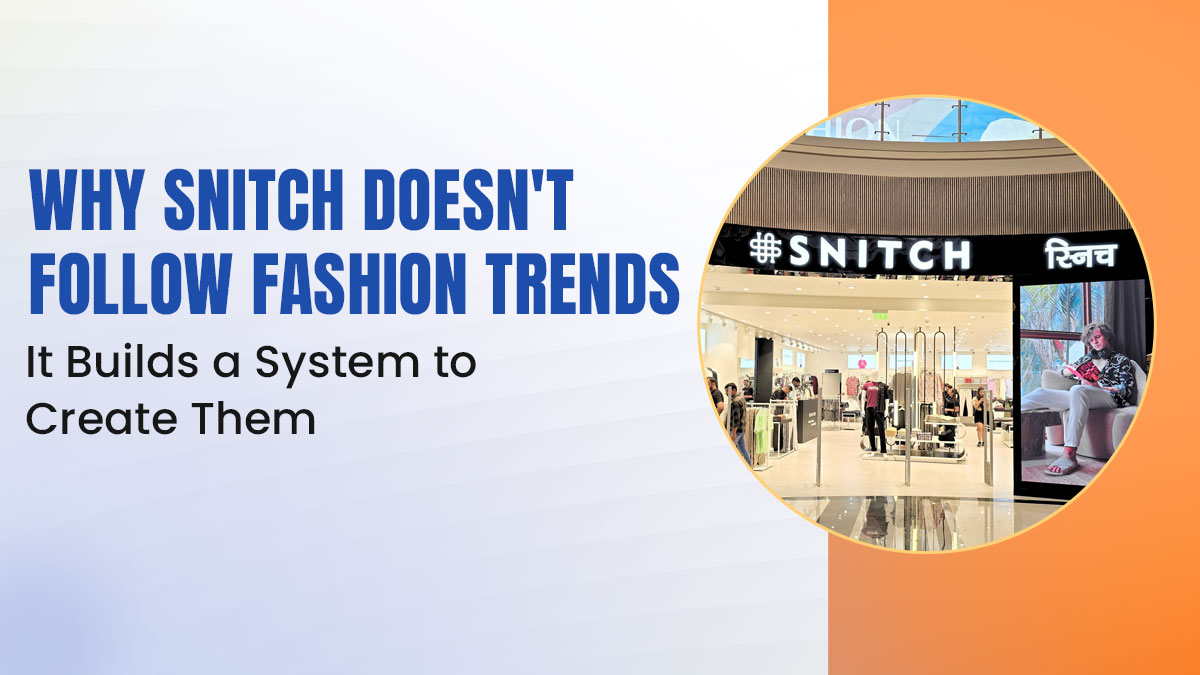
They opened physical stores, but not the kind your parents shopped at. These weren’t transactional spaces. They were experiential. Physical experiences designed to deepen the relationship with the brand, to let customers touch, feel, try, and Insta story their way through a space that felt like them.
This is brand building in 3D. It’s the digital-first brand proving it can win offline too. It’s creating a full sensory experience that an algorithm can’t replicate.
And it worked. The stores became customer acquisition engines themselves, pulling in new audiences who might never have stumbled on them online. Each visit became content. Each fitting room mirror became a creator studio.
Tribe Building: The Ultimate Competitive Moat
Let’s talk about what happens when you do all of this right. You don’t just get customers. You get a tribe.
Snitch’s audience doesn’t just buy clothes: they identify with the brand. They defend it in comment sections. They wait for drops. They feel like insiders.
This is the endgame of modern brand building. Not just scaling revenue, but scaling loyalty. Here’s what nobody tells you when you’re burning cash on ads: acquiring customers costs money, but building a tribe? That’s where the real magic lives. When you create something people want to be part of, they stop being customers and start being evangelists. Your retention rate becomes your growth strategy. Your brand becomes a mirror that reflects who your audience wants to be.
Snitch understood that in the fashion industry (and honestly, in any industry) the brands that win aren’t the ones with the best products. They’re the ones with the strongest tribe building engines.
What Founders Can Steal From This Playbook?
You might be thinking, “Cool, but I’m not in fashion. How does this apply to me?”
Here’s how:
- Listen before you launch.Use data not just to track performance, but to spot opportunities. What are your customers asking for thatdoesn’t exist yet?
- Compress your cycles.The faster you can move from insight to execution, the more advantages you create. Speed isstrategy.
- Turn customers into content.User generated contentisn’t just cost-effective: it’s more trusted than anything you could produce yourself.
- Think beyond transactions.Whetherit’s a pop-up, a community event, or a surprise unboxing experience, create moments that make people feel something.
- Build for belonging.Your brandisn’t what you say it is. It’s what your customers tell each other when you’re not in the room.
Snitch didn’t follow trends. They built a system to manufacture them. And that system isn’t locked behind a luxury budget or a SoHo office. It’s a mindset. A commitment to speed, listening, and creating something worth talking about.
The Work Ahead
So here’s the real question: Are you building a product, or are you building a movement?
Because the brands that will matter five years from now aren’t the ones chasing what’s popular today. They’re the ones creating what people will care about tomorrow.
You don’t need a crystal ball. You need a system. You need to listen harder, move faster, and care more about the people who believe in what you’re building.
The blueprint is here. Snitch proved it works. Now it’s your turn to build something that doesn’t just sell—something that sticks, spreads, and becomes part of the culture you’re trying to shape.
You don’t need permission to start. You don’t need the perfect plan. What you need is to stop waiting for the right moment and start building the one thing only you can create.
Begin small if that’s what makes sense. But begin with purpose. Because somewhere out there, someone is waiting for what you’re about to build. They just don’t know it yet.
The world has enough followers.
Be the one who leads.
